

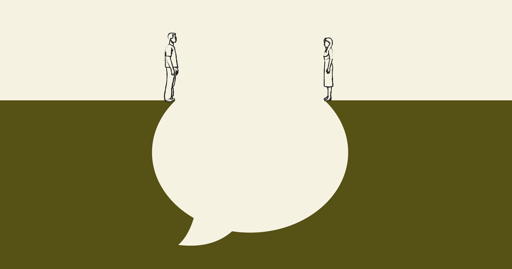
Right now, there is a general belief that people of all ages are losing the ability to speak easily to one another. Increasing political polarization, the ubiquity of screens, the COVID-19 pandemic — all have contributed to a malaise and neuroticism around the practice of conversation. In the U.K., the phenomenon of young people failing to return to school since the pandemic has become so widespread that they are collectively labeled “ghost children.” A teacher friend told me that some of these children have confessed to her that their biggest fear is anticipating negative conversations they could have with their peers. After so long engaging almost exclusively with other children over social media — platforms that can intensify and melodramatize even the most quotidian encounters — they have forgotten what face-to-face interactions are like. The truth is, my teacher friend told me, the majority of conversations kids have with one another throughout the school day are neutral or often quite nice.
As lockdowns lifted, there were numerous reports of people feeling anxious about their atrophied social skills. Even before the pandemic, psychologists had found that more of us are choosing to break ties with loved ones. A 2019 psychology study suggested that more than a quarter of Americans are currently estranged from a relative — and that the majority of those interviewed in the study found the experience “emotionally distressing.” Even if estrangement is a choice necessary to our health or safety, we remain haunted by the absence of the people we leave. We dream of some alternative way it all might have gone: If we’d just found the right words to articulate our position, they might have come to understand or accept it; if we’d only kept to certain topics and avoided others.
In response to these worries about conversation and connection, a glut of self-help-adjacent books has appeared, promising to teach us to do it better: Alison Wood Brooks’s TALK: The Science of Conversation and the Art of Being Ourselves, David Robson’s The Laws of Connection: The Scientific Secrets of Building a Strong Social Network and Jefferson Fisher’s The Next Conversation: Argue Less, Talk More, among many other titles. For several weeks, I lugged these books around between the library and various social occasions. I am long out of my adolescent period of social anxiety. And yet while reading them, I became acutely aware once more of how I engage in conversation.
I am afraid of self-help books though.
