

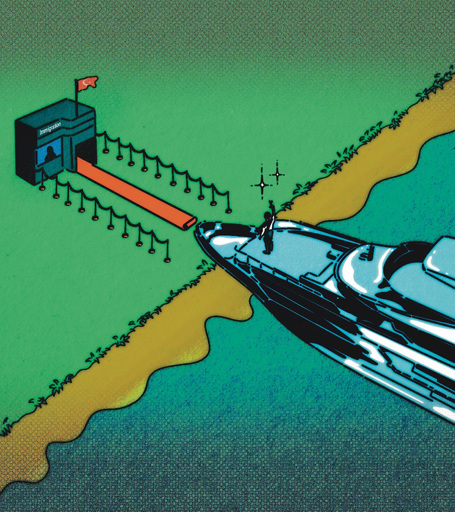
As of 2025, at least nineteen countries had a legal basis for naturalizing individuals who invest in the country or donate a specified amount, with over a dozen hosting active CBI [citizenship by investment] programs. The Caribbean is home to five: Antigua, Dominica, Grenada, Saint Kitts, and Saint Lucia. The greater Mediterranean region is another hotbed, with Turkey, Egypt, North Macedonia, and Jordan offering programs, even as Malta, Cyprus, and Montenegro exit the scene. In Asia, Cambodia has a CBI program, and in the South Pacific, Vanuatu has a smorgasbord of available options.
Until recently, CBI schemes have been the preserve of small island countries with populations of less than one million. For such microstates, a sizable injection of foreign funds brought through CBI can have a considerable economic impact. However, the landscape has recently begun to change as more substantial nations, like Turkey and Egypt, enter the game.
As other countries like Armenia, Croatia, Georgia, and Panama discuss options, CBI doesn’t seem to be going away anytime soon.
Citizenship is not only an unusual commodity; it is also unusual as a commodity, which presents distinct challenges when building a market around it. States can shield populaces from the worst effects of the market by compensating them when markets fail. Yet in the case of citizenship, the state is both the key market regulator and the sole producer of the good, for in the contemporary world, only states make citizens. If a government does not recognize a grant of citizenship as its own, the status is null and void.
Stateless people, like the Rohingya of Myanmar or ethnic Russians of Latvia, know the dire consequences that can result when a government disavows them as outsiders. Even if they once had claims to belonging, their citizenship no longer counts if the state doesn’t stand behind it.
NGL the Caribbean sounds lovely! I enjoyed daydreaming whilst reading this article especially on a dark and gloomy day like today.
Thank you, alyaza…for a moment you transported me to my paradise. ^_−☆EDIT: Sent this article to friends, now back to reality:
Stateless people, like the Rohingya of Myanmar or ethnic Russians of Latvia, know the dire consequences that can result when a government disavows them as outsiders. Even if they once had claims to belonging, their citizenship no longer counts if the state doesn’t stand behind it.
“…if you can afford to pay”
