

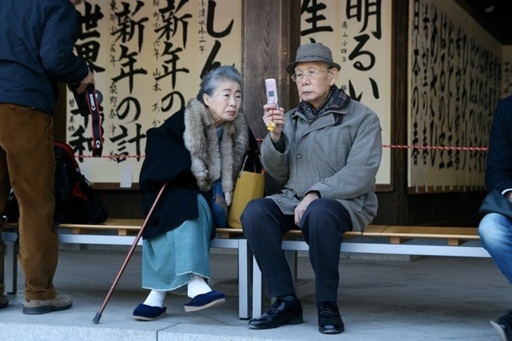
Japan’s demographic crisis is deepening faster than expected, with the number of births this year on track to fall below even the government’s most pessimistic projections.
Archived version: https://archive.is/20251228215131/https://slguardian.org/japans-birth-rate-set-to-break-even-the-bleakest-forecasts/
Disclaimer: The article linked is from a single source with a single perspective. Make sure to cross-check information against multiple sources to get a comprehensive view on the situation.
Japan before WWII
So:
→ lots of children
→ many young adults
→ few elderly
Japan after WWII
→ baby boom
→ improved healthcare
→ Japan gives women more freedom to study and work. But… the system around family, work, and care barely changes.
→ Conclusion: children are discouraged
Fertility collapses + a huge adult generation (from the baby boom) From the 1970s onward, the birth rate drops dramatically due to:
→ Japan falls to about 1.2 children per woman → structural population decline.
Lessons / Conclusion: Japan shows what happens when you don’t make structural changes for a long time. Too few workers + too many elderly = shortages of labor, money, and care.
Solutions
Countries like France and the Scandinavian nations do better:
Result: higher birth rates than Japan, Italy, Spain, and formerly Germany. If you want a “younger” society → invest structurally in good family life.
Without immigration → extreme population decline and extreme aging.
In Europe: immigration + integration makes aging far less severe.
Japan can insist “we don’t want immigration,” “we are homogeneous,” “we’ll manage through discipline,” but eventually this collides with simple math. If we want to preserve our way of life, we have to take demographic reality seriously, with better childcare, higher productivity, and controlled immigration.