

edit maybe the state is South Australia, or at least that is what the comments said but idk
South Australia
#isaveyouaclickAs a South Aussie, we also have HUGE amounts of roof-top solar.
I’ve currently got a 2.8kw system and am upgrading it this year to a 16kw with a 32kwh battery. I’ll use it to charge my ev (another purchase this year, possible changing both cars) and get a bidirectional charger installed so, when there is limited power in the grid, I can sell some of it back at stupidly high prices, including some from the car too. We use about 20-40kw per day (40kw only on really hot or really cold days), so should cover us for a while.
In case anyone wants cost breakdown, it’s going to cost about $30k, and will pay for itself due no bills in a maximum of 8 years and a lot fewer if we sell spare electricity back to the grid.
Saved you a click: It’s South Australia
The biggest impact on SA power prices right now is the wild price fluctuations, because the power price ceiling is $23,000 and the floor is -$1000 it means that it only takes a few hours at the ceiling to completely blow average prices up
And sadly we won’t be able to write this article at the end of the summer quarter because SA had a major heatwave that lasted a week:
South Australia endures record-breaking heat
Minimum of 34 degrees overnight
https://www.youtube.com/watch?v=2dKOp6d6dvo
Which meant a boatload of air conditioners on 24x7 which meant a ton of power draw on the grid so it maxed out for ages
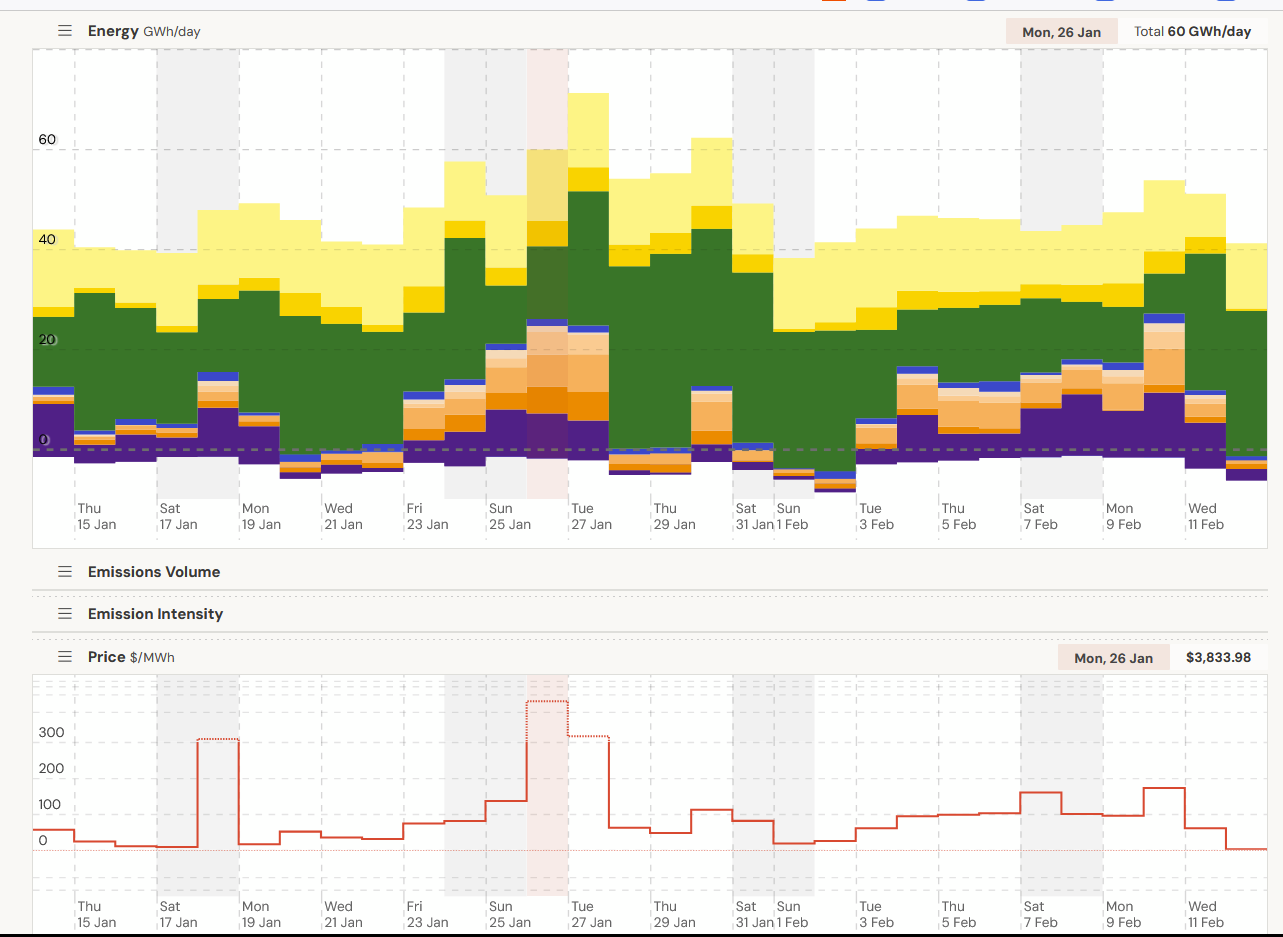
So yeah a painful one coming up
Basically free power most of the time and very expensive sometimes seems like a slam dunk for deploying battery storage to be honest
Haven’t you read the studies about how batteries kill whales though?
Natural gas is far safer for nature and I arrived at this position entirely organically.
yep batteries are definitely all the rage, especially with solar farms getting fuck all out of their stuff these last few years as the daytime price keeps going negative
The first Tailem Bend solar farm was the second big solar project in South Australia, after the 220 MW Bungala solar farms near Port Augusta. Those facilities are also heavily curtailed, and Bungala’s joint owners Potentia Energy are considering a big battery at that site too.
At first i thought “kinda weird to talk about summer like it’s happening right now”, and then i realised… it is. Hemispheres be fucky
I’ll save you a click… it’s South Australia. (I think, I didn’t read it, but these guys said it is)
I guess it won’t be bad to have a flat rate electrical connection, with the rate mainly depending upon the maintenance costs.