

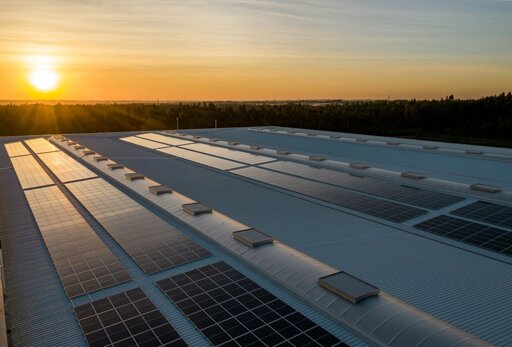
Imagine a world where solar panels continue to harness energy even when the sun isn’t shining. It sounds like science fiction, but advancements in technology are making this a reality. The idea of solar panels that work at night is not just an intriguing concept; it is a groundbreaking innovation poised to revolutionize the renewable energy landscape. This development could potentially bridge the gap in renewable energy production, offering a continuous source of clean power. As we explore this exciting innovation, we delve into the mechanisms, potential applications, and impact on our future energy needs.
Nocturnal solar panels might sound like a paradox, but they are based on a simple yet innovative principle. These panels utilize the concept of radiative cooling, where they emit infrared radiation to the cold night sky, creating a temperature difference. This temperature gradient can then generate electricity through thermoelectric generators. The idea is to harness the thermal energy that naturally occurs when objects release heat, allowing solar panels to produce electricity even in the absence of sunlight. This ingenious approach not only extends the functionality of solar panels but also opens new avenues for energy production.
Pretty sure it’s AI generated but Stanford has been working on it. As of 2022 their panels could generate 50 milliwatts per square meter at night. Definitely far cry from the 200 watts per square meter during the day but I also don’t know how much power is used at night vs the day (guessing not that little).
The team has said they have ideas to greatly increase output but again no idea how much.
If it’s only 50mW it seems like it wouldn’t be worth whatever the extra cost is to roll this out for anything except super niche applications. Even off grid you’re probably just better off saving solar in a battery or putting up a small windmill.
Yes 50 milliwatts is what googling says you can get from tegs. And the delta T giving 50 milliwatts drops to 0 in an hour after the panel cools to ambient at night.
That’s why the article is such bullshit. A basic understanding of heat can prove there’s not significant energy that can be harvested from a slab of glass going from 30C to 0C even at 100% efficiency.
Without even doing the math I’m screaming, “How long do they think solar panels take to cool down?!” Hell, they start cooling long before actual sundown.
SOURCE: I’m outside at sundown nearly every day.
4000:1 is pretty bad. Also, you presumably only get that on a clear night.
Depending on the climate peak load often occurs just after sunset as people get home, take showers, and cook dinner.
Minimum overnight load is maybe a tenth to a third of daytime loads depending on which way the incentives operate.