

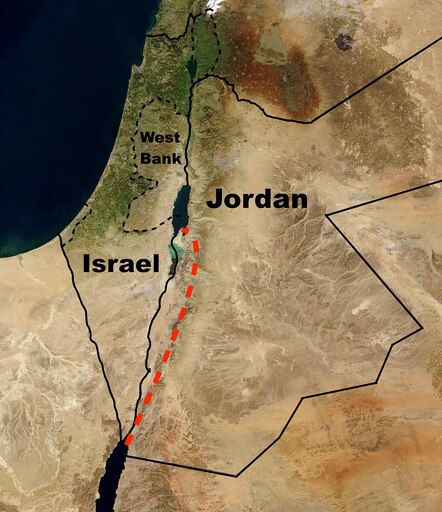
The surface of the Dead Sea is hundreds of meters below sea level so it seems like pumping would only be needed to prime a siphon and then it could keep flowing. What am I missing?
I am a pretend engineer, so take this with a grain of salt, but my guess is that because its very hard to perfectly airtight seal a pipe of that length, the siphon would be very hard to maintain.
My guess is pumping losses. Essentially there’s friction moving water through a pipe, and the distance would be so long as to make said friction higher than the available suction. It would probably just start cavitating and destroy the pipe.
Also, the maximum pressure you could have enough siphon is the difference in air pressure between the two ends. If you want more pressure, you have to pump.
A siphon is powered by air pressure on the surface of the source and can only lift water as far as the available pressure pushes it. That’s about 10 meters for atmospheric pressure, no matter how much vacuum you pull on the other side. If the route requires lifting more than that along the way, the siphon would not work at all.