Are you sure? If we assume you saved 10 USD per day on food, that means you can invest 3,650 per year. If you do that for 50 years and assume 5% interests, you end up at 844,182.20 USD.
Inflation has been ignored to simplify it a bit, but it works in both directions: your money is worth less than today, but over time, as food is getting more expensive, you also save more and more money per day.
Not really realistic for my hometown at least.
I don’t know any bank offering interest on saving deposits that is higher than 3%.
If I only didn’t have to spend money on food and would save like 5000€ per year while earning the average salary in my town with 3% interest (which is already pretty optimistic) I’d have like 500,000€ in 50 years. While an average house would cost several million at that time (rn it’s ~1 million €). I couldn’t even buy a flat.


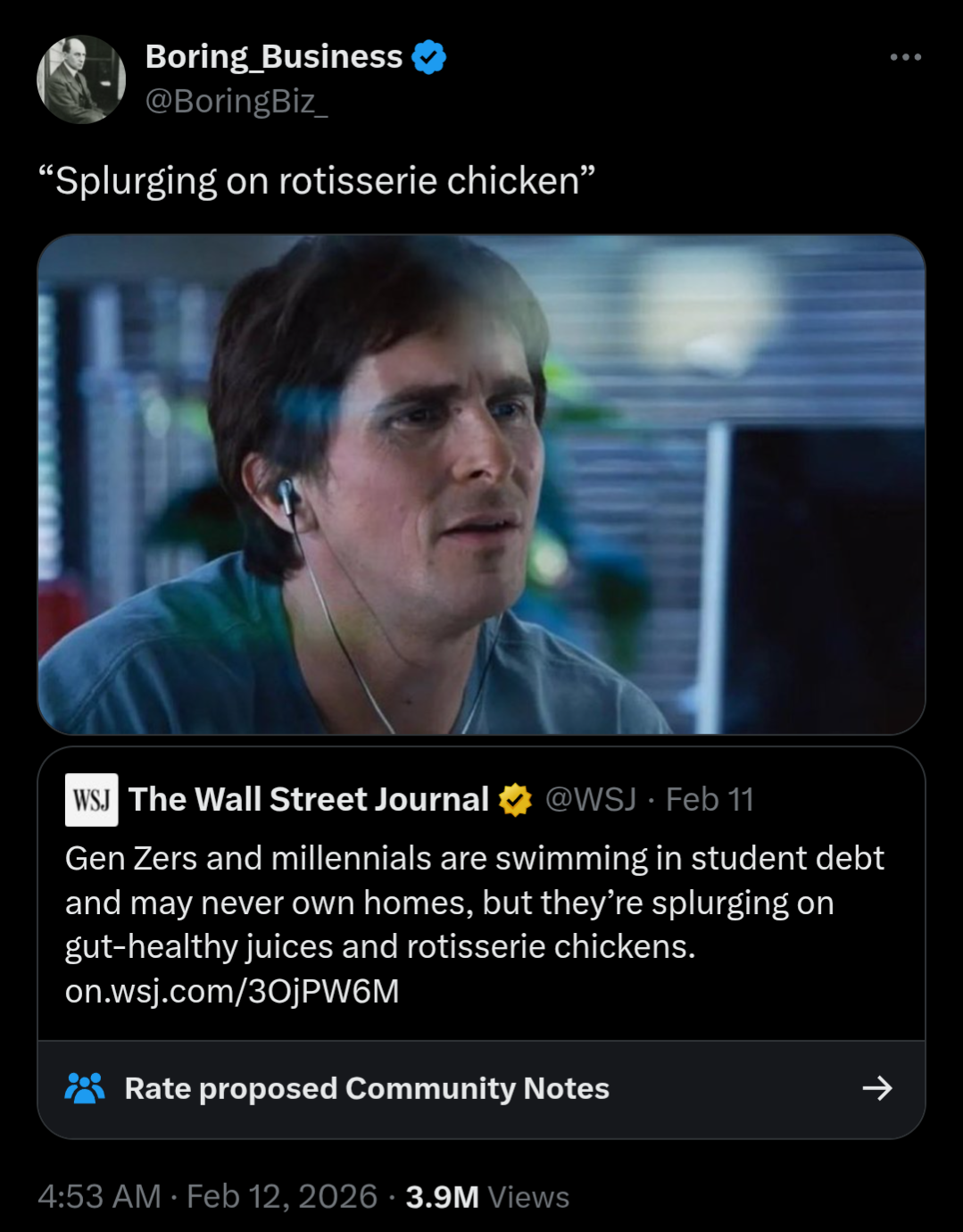
Are you sure? If we assume you saved 10 USD per day on food, that means you can invest 3,650 per year. If you do that for 50 years and assume 5% interests, you end up at 844,182.20 USD.
Inflation has been ignored to simplify it a bit, but it works in both directions: your money is worth less than today, but over time, as food is getting more expensive, you also save more and more money per day.
deleted by creator
Excellent! Now I just have to sort out the eating for free part and I’m all set!
I know some excellent public apple trees if you’re in Germany one day. :P
Not really realistic for my hometown at least. I don’t know any bank offering interest on saving deposits that is higher than 3%.
If I only didn’t have to spend money on food and would save like 5000€ per year while earning the average salary in my town with 3% interest (which is already pretty optimistic) I’d have like 500,000€ in 50 years. While an average house would cost several million at that time (rn it’s ~1 million €). I couldn’t even buy a flat.
Yeah big banks in canada give like 0.1% interest, my credit union gives 0.3%