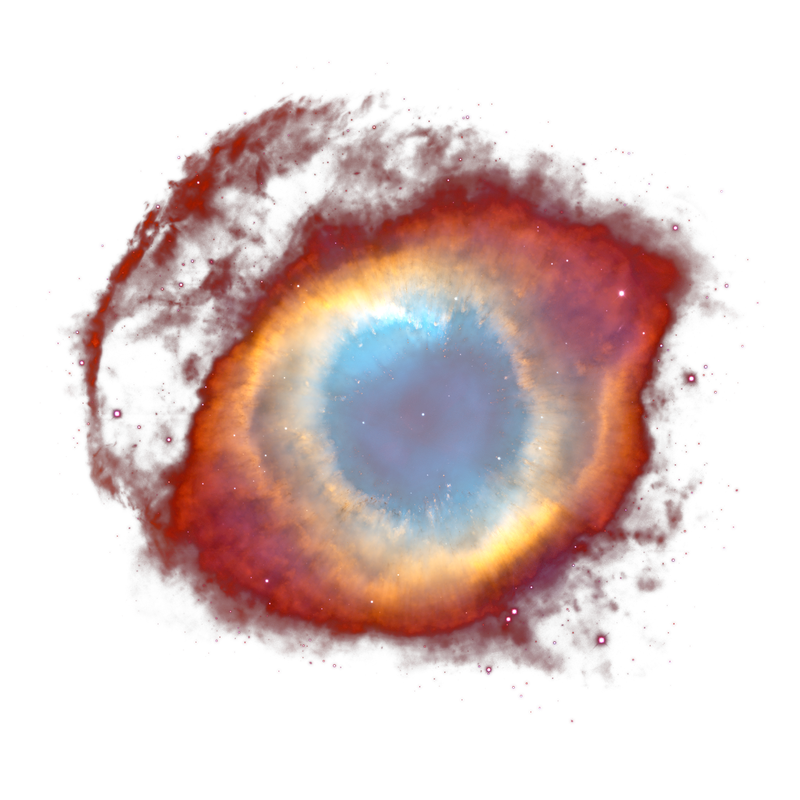
The discovery of all five nucleobases on Ryugu strengthens the idea that life’s molecular ingredients formed in space before reaching Earth.
A new study reports that samples from the asteroid Ryugu contain all five fundamental nucleobases, the molecular “letters” of life.
Tiny asteroid grains can preserve chemical clues about the ingredients that may have helped life emerge on Earth. The Ryugu material was returned from space in 2020 by the Japan Aerospace Exploration Agency’s (JAXA) Hayabusa2 mission.
In 2023, an international research team reported finding uracil, one of the nucleobases, in the Ryugu samples. Now, a study published on March 16, 2026, in Nature Astronomy by Japanese scientists has confirmed that all five nucleobases are present in the pristine asteroid material.
The finding suggests that these life related ingredients may have been common across the young Solar System…
This is amazing. Panspermia for the win. There’s definitely life out there.
of course there is. There is nowhere on earth, under any conditions, where bacteria are not found.
Lava. Gotcha bitch. What an idiot.
They didn’t specify living bacteria!
I mean, there could be, but it’s kinda hard to look into lava at the current moment
Open your eyes, Einstein. It’s not that hard jeez
The surface texture is a solid png, so you can only see the very surface and not how deep it is or what’s going on inside.
IDK. We’ve found bacteria that specialized into living inside a running nuclear reactor. I’m pretty sure that we will find bacteria living in The Sun, much less lava.
You are not wrong but there is a pretty large temperature difference between the two. The rods are super hot but I’m pretty sure the bacteria live in the water off the rads…? I may be wrong. I was just shit posting.
Yeah, my comment was also mostly tounge in cheek. I just find it incredible that they can survive an environment that would kill basically anything else, and they are eating, as you said, the very thing that kills everything else. Just “munch much, yummy radiation.”
deleted by creator
There’s that ridge in Antarctica that’s pretty close to being deadballs. With perchlorates, even.
Alright, easy there, Fox Mulder.
Life uh i want to believe
This just says the chemistry or DNA uses exists in nature, it is not about DNA being found, it is not about evidence of life
The more evidence is found, the more panspermia checks out. Honestly, I don’t love it. If life arrived on earth, or in fact if it arrived in the sol system via panspermia, that introduces so many more questions…
Part of the walkout to disclosure is finding microscopic life on planets in our solar system. It looks like we did find mold on mars, it was dead but we don’t know any other way to get spots like that
Any chance the samples are contaminated? Wouldn’t want to get my hopes up.
They’re small molecules, they can just form naturally. They’re used for DNA because they’re small and flexible and easy to make.
The article suggests they strictly controlled for that, but it would probably be impossible to completely rule it out
I love these discoveries because it reinforces my belief that there is complex life all over the solar system. Like exotic fish on Europa and weird flying creatures on Jupiter type of complex life.
Well the thought of complex life all over the place is in fact really cool. But that also comes with some scary implications. If it turns out that complex life is extremely common, that’s actually very bad news for the outlook of our civilization. It would mean that life starts up all the time and for some reason it never survives long enough to develop advanced technology.
For that reason I hope that we find bacterial life, but nothing larger than single cells. I hope that eukaryotic life is extremely rare.
Or it’s developed advanced enough life that they’re hiding from us until they deem us fit to join the intergalactic community.
Well that’s certainly a valid theory to explain where everyone is. In examination though, it’s not a terribly robust theory, because it assumes that the “galactic community” is a monolithic body with no bad actors. I mean even if whatever galactic council in charge decided not to interact with us, you don’t think that some third party wouldn’t just do it anyway? There’s always some jerk breaking the rules, always. And if there’s a whole galaxy full of individuals, there are a whole lot of chances for someone to be a bad actor. How do you control the actions of a whole galaxy of individuals?
Perhaps with enough Jan Michael Vincents deployed in this quadrant…
Haha, www.lawofone.info/s/1 has the answer to that 😂
It may be that land is fairly rare on planets with life. Much of the chemistry we rely on for civilization-building doesn’t really work under water.
I think that stellar bodies like Pluto, which has volatile ices, might represent one of the most likely places for things like this to form. The biggest issues I see with “earth bound abiogenisis” is the concentration issue. You need some physical process to concentrate “stuff that life is made from” into a small enough area to create interesting chemistry. Oceans and even most lakes don’t work for this. Shits just too dillute for anything interesting to happen.
But an object like pluto, in the flyby a few years ago, you can clearly see a geological process operating on its surface, related to the repeated freezing and thawing of volatile ices on its surface based on its oblong orbital path. This represents a potential pathway where interesting biological precursors can pile up over time, and it can just keep going and going and going. It can basically run indefinitely, concentrating organics and precursor chemicals almost indefinitely.
Then, couple that with a finding like this one, about asteroid impacts resulting in the development of thermal vents, and now you have a mechanism where high concentrations of organic precursors, having piled up on an asteroid for millions of years, could slam into the earth and create their own conditions for a cycle where much more interesting chemistry could occur.
Energy is an issue for theories of life on Pluto. The sun is incredibly faint, irradiance of 1/1600th that on Earth, so photosynthesis likely isn’t feasible.
Pluto is quite small, and therefore almost certainly is geologically dead (no molten core - the heat has already escaped) like Mars - so thermal vents are also unlikely to be widespread.
Pluto has a low density for a rocky world, about 50% less than the moon, so the heavier radioactive elements cannot be present in large amounts (as would be predicted from its position high up in the system’s gravity well).
So, with poor prospects for photosynthesis, poor prospects for geothermal energy availability, and poor prospects for radioactive decay - where would simple Cthonian lifeforms get their energy from?
I think have completely misunderstood whats being said. I’m not talking about life evolving on pluto whatsover. I’m talking about precursor chemcicals for the evolution of life building up on pluto. And not through heat coming from the core of Pluto, but through surface chemistry happening from the repeated warming and cooling cycles of volitile ices on the planets surface as it passes around the sun. The relatively recent missions to Pluto confirm that there is strong evidence of an active geology on Pluto, but not one based on molten rock; one based on volitile ices (n2, n3, no3, co, c4, etc…), species which would be extremely short lived at earths surface temperature. This is evidenced by un-cratered areas across the surface where fresh ice has been deposited, compared with cratered areas which have suffered asteroid impacts. The proposal is that as Pluto comes close to the earth, these ices sublimate, and cause ice volcano eruptions, and then precipitate. But the idea of an active geology also creates the opportunity for more complex mineral species to arise. So it might be possible in Plutos very different geological cycle, there is the possibility that these volatile ices can form more complex minerals, like small single units of DNA, RNA, etc. Not life, but precursor chemistry for life. This article is further evidence of that. Instead of a molten core and mantle process, imagine a surface geology of freeze thaw cycles which concentrate minerals. This same process/ principal could apply to asteroids. They might undergo a freeze thaw cycle with the volatile ices at their surface, which could create a mineral cycle resulting in the concentration of organics.
The part I’m coupling it with is other research that has recently demonstrated that hydrothermal vents tend to pop up where major asteroid impacts have occurred. Basically, several large lakes with hydrothermal vents as a result of an asteroid impact. I think also the crater in the gulf of mexico.
So imagine the following scenario. An asteroid has been circling around some where in the solar system for hundreds of millions of years. Its big enough for a freeze thaw mineral cycle and organic precursors have been piling up for thousands of millennia; not life, but bits of the stuff of life. Then, bad luck day. It get its orbit perturbed in some manner, and its orbit ends up in a collision course with earth. It slams into a land surface some where. It forms a large crater, and because its a large crater, it forms a lake inside. At the bottom of the lake are hydro thermal vents.
We’ve now solved for most of the major challenges of abiogensis. Where do the precursors come from (a mineral cycle we’re just learning about)? How do we concentrate them sufficiently (asteroid impacts which create craters)? And how do we introduce something which can support a novel chemical cycle which can further concentrate and accumulate chemistry to the point where even more complex molecules can arrive (proteins, DNA proper/ RNA proper, lipids, etc…).
You haven’t gotten any upvotes for this but I hope it’s because like me- I assume this is a viewpoint a lot of us think is definitely possible and so much so I’m surprised we havent fully proved at least the basics of it yet.
Is what it is. I have a biology degree and took evolutionary biology coursework in graduate school. I didn’t go that direction in terms of career but I’ve kept up with it at a “more than ley” distance ever since, because its obviously super interesting. The classes I took were when I was in a paleobotany lab and it was a big part of my life for a while, now, not really at all beyond reading the papers and asking annoying questions to NASA scientists like “can I have your data?”.
Also did biology with evolutionary biology upper division coursework. Part of the reason astrobiology seeks for signs of water is that water is the known common factor of earthbound life.
The portion I remember about extremeophiles also looked at the perched lakes under antarctica. As I remember there IS a degree of mineralization that takes place in those lakes as stromatalite formations by proteobacteria.
Essentially if there’s water and any kind of radiation around minerals then the building blocks for life start to appear.
Water+mineral+radiation = Life, maybe? (Maybe divided by time/luck?)
jeez… guanosine, adenine, uracil, thymine, cytosine. This means both DNA and RNA.
Well, not all RNA, though this discovery means all bases have been found in some capacity on multiple stellar bodies.
We have a 6th pseudo-base for tRNA which occasionally appears as the 3rd base pair in the transcription anticodons Inosine, which together with Uracil makes up something known as a wobble base pair.
Similar to how Uracil replaces Thymine in RNA, Inosine will replace Guanine, Adenine, Uracil, and Thymine. However, it only appears on the 3rd base of anticodons during transcription. This base pair is essential for transcription and redundancy
Tell us something everyone doesn’t already know, mr smart guy. Pfft
Great! Now I have to explain to the kids that I was wrong about the whole “sugar and spice and everything nice” and “snips and snails and puppy dogs tails” theory, and get them up to speed on a genetic asteroid delivery service. /s
Well damn, I knew I left 'em somewhere.
Par for the course, you lovable sidekick you
The selfish gene has read the hitchhiker’s guide to the galaxy
Isn’t this like waving a dictionary above your head and saying “Look, I found the complete literary works of the English-speaking world in one regular-sized book!”?
A dictionary you found on an asteroid in space, yes
Finding a dictionary on an asteroid would be pretty impressive, ngl.
If it were still a mystery where written language came from and the dictionary landed from space, then yes just like that
strengthens the idea that life’s molecular ingredients formed in space before reaching Earth
Yeah, I’m not buying this. All this is saying is that the building blocks of life are surprisingly easy to form, a lot easier than most people realize. The hard part comes afterwards, which is the reason it took like a billion years for single celled life to develop once the earth cooled down enough and another billion to perfect the replication chemistry.
It’s the same conclusion to draw when we found amino acids on asteroids a while back.
great news everybody! god is a fraud! rejoice and praise hypnotoad!

so our ancestors were all stoners