- 6 Posts
- 377 Comments

 4·2 months ago
It’s not illegal. Currently you need a permit from the electric utility to operate solar on your premise if you still want to be connected to the grid. You can also do off-grid solar, in which case you don’t need a permit at all since you’re not impacting the grid with your solar generation.
As soon as you want to interconnect your solar and turn it from off-grid to on-grid, that is when a utility permit is required. This gives the utility’s engineering department a chance to review your solar setup and determine if it will be safe in the event of a grid disturbance.
Plug-in solar laws look to shift that engineering review and permit process away from the electric utilities to safety laboratories like UL. If all plug-in solar products are required by law to have certain safety functions if they want to be sold as “plug-in” to consumers, then there’s no need for the utility engineering review as products must comply with UL requirements to be sold as “plug-in” devices.
What these laws do is make it easier for prosumers to generate their own electricity if they purchase the right equipment, while also freeing up utilities’ workloads by not having to review even the smallest kinds of arrays (think 10-20 kWac on the residential side vs 500-10,000 kWac on the commercial side). Should make everything smoother for everyone while promoting people’s right to sunlight and electricity generation from that solar access.
Currently to have solar in the US, you need a permit from your electric utility. The process of granting that permit means utility engineering looks over your proposed solar setup, and determines if it will be safe for the grid if switched on.
Plug-in solar laws look to remove that permit process, but the engineering check still needs to be there so people don’t plug in random shit and put others at risk of electrocution during outages. That’s where UL steps in and requires all plug-in solar products to adhere to minimum safety standards.
Plug-in solar shifts the engineering burden from utilities to safety laboratories like UL. This means prosumers have an easier path to generating their own electricity, and utilities don’t get bogged down with small prosumers that are only interconnecting single or double digit kWac arrays.
 2·2 months ago
Deck Ready is also a great YT channel about Steam news!
 1·2 months ago
Pokémon Leaf Green
 6·3 months ago
Workers of the world unite
And the people fighting forest fires are likely modern day slaves to the industrial prison complex!

 7·3 months ago
I stay optimistic through humanity, through organizing with others, through connecting with my local community and sticking up for communities around the globe.
A lot of what keeps me optimistic is spite, though. I hate that the future of my kids will be worse than my present. I want to change that, for them and for all future life on Earth.
There are decades when nothing happens; and there are weeks when decades happen.
 4·3 months ago
As a vegan, this kind of language is inclusionary and promotes adoption of our lifestyle, even if it’s slow as molasses.
Thank you for your advocacy!
 4·3 months ago
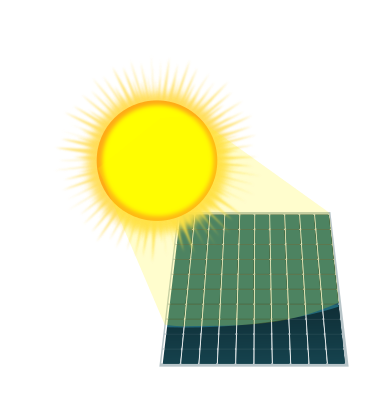
ROI would take a lonnnnng time, in my view. It’s the same idea as installing modules under asphalt roads or even above them. It’s not really worth the O&M hassle whatsoever.
The same idea goes for installations like canals. They’re linearly too so not the wisest use of modules. But the benefit of modules over water like that is lower rates of evaporation as the panels block the sun. Same is true for water department reservoirs that see lots of algae. The panels block the sun and choke out the algae.
But you’re right about the shading. If these panels are installed in higher latitudes, then odds are they might never see the sun directly at certain times of the year. Usually solar designers only recommend flat horizontal mounting for modules in hurricane- or tropical storm-prone regions like near the tropics, or close to the Equator where the Sun shines directly overhead most of the year.
What I COULD see happening is if governments around the world start transitioning railroads to have H-frame structures that suspend feeder lines like what’s used in electric trains with pantographs. If you set up those H-frames frequently enough, you have the underlying structure similar to carports and can install modules 4-10 modules wide. THEN you can utilize string inverters every 7-8 H-frames or so, converting the solar DC power into AC which can help feed the train loads as they pass or feed the grid.
Bonus of the above system is that over time, all trains including rail freighters become electric or at least hybrid to make use of the free power generated above them throughout the railway.
Lots of ideas!
I don’t think it’s that as much as it is putting modules near trains that have glass prone to micro cracks that can highly accelerate degradation of the panels to the point where they start cannabalizing others.
Still, I think you could probably install modules with polymeric front sheets instead of tempered glass to fix that issue.
No such thing as an impossible problem for engineers! Only impossible costs ;)
By “in series”, do you mean linearly? Depends on context.
For Commercial & Industrial (C&I) applications like rooftops, canopies, façades, canals, floating islands, and the like, panels can be strung in series linearly sure. But because C&I arrays also tend to be arranged in polygons and more often rectangles, this allows the solar designer to string in non-linear ways.
One way to string in these contexts is to prioritize loops where the start and finish of the string are 1 module apart. A lot of RF enthusiasts don’t like it when modules are strung this way because conductors arranged in a loop act as an antenna that can send and receive EM waves.
Another way to string is the snake or zigzag method where strings are patterned like this: ,|‘’‘’‘’‘|,|’‘’‘’‘’’ in rows that are 2-modules wide. The snake method can also be applied to 3-mod, 4-mod, etc. wide rows depending on what stringing method ends up being feasible.
For ground-mount applications at the community-, Distributed Generation- (DG-), and utility-scales, solar stringing is usually done linearly or in loops due to the constraints of the racking, although snake/zigzag can apply in some instances. Ground-mounts can either take the form of fixed-tilt (FT) racking, single-axis trackers (SATs), or dual-axis trackers (DATs).
With FT, the usually racking setup is 2-in-Portrait (2P) where you have 2 rows of modules abutted next to each other facing South. These are usually designed in long rows along a property line, so it’s easy to make strings completely linear or half-loops where you turn the string around at the halfway point of what would otherwise be a string line. FTs can also be arranged as 3- or 4-in-Landscape (3L or 4L) which allows for more loops and snakes/zigzags.
With SATs, you’re always stringing things linearly.
For DATs, you get the same benefits as C&I, 3Ls, or 4Ls because each DAT is separated from the rest of the array so the mini-array can track the sun. Lines, loops, or snakes/zigzags work, with a preference for loops and snakes/zigzags because DATs are rarely sized large enough to accommodate the entire widths of strings (sometimes 15-30 modules in length).
With railroad-based solar, my bigger concern is that since the modules have to be in a single line that CAN’T repeat in rows to the North/South in a typical array, this means all those strings will need to run a long way before being collected at an inverter to turn into AC. That long length adds to voltage drop in the circuit, which is an energy loss on the system. You can get away with this by adding microinverters for every 1 or 2 modules. Microinverters like that add a lot more complexity in terms of Operations and Maintenance (O&M) purely because there are more parts to break down. With string inverters and even central inverters, you have less O&M breakage but the flip side is that those work better with more centralized/rectangular-like arrays.
Doesn’t mean it can’t be done, but it’s certainly more expensive than any other implementation of solar.
One of the benefits I can actually see with using microinverters over string or central inverters is that you break up the “array” of modules so that shading from the trains affects less of the “array” than if everything was collected at the DC level. You can isolate the shade-affected parts better, and promote better energy reduction.
Idk I’m interested to see what comes from this! Definitely a wild idea haha
I’ve always been an advocate of the canopies above train stations having solar panels to help power the local loads and maybe push power back to the grid.
Solar canopies are used in many other places like parking garages/lots and canals, so the technology is there.
I’m starting to wonder if it’s the vibrations from the train that makes these installations risky. Those same vibrations would happen to in-track solar PV like what’s shown in OP’s article. It’s certainly possible to design around, as the EU is showing!
 1·3 months ago
I’ve never used Affine, so unfortunately no :/
As a practicing solar engineer, I don’t like the idea of applying solar panels linearly because they can benefit much more from centralization meaning applying panels to an area, but to be honest I think it’s cool that humans are discovering new ways to use these things.
Sunlight is everywhere, so bring on the solarpunk!
I like Trilium because:
-
Docker based so I can access from a web browser on any device
-
Has both WYSIWYG and Markdown note-taking formats
-
Can display math symbols in WYSIWYG, essential for anybody studying STEM
-
Has a mind graph view to see linked notes in knowledge clusters
-
Storage system is intuitive as every note is both a folder and a note, allowing for extremely modular storage
Helix could be cool, but it’s going to take a lot for me to transition off of Trilium now.
-
This is why I have a Framework laptop with modular ports.
I can change which ports my laptop has, and on which side it has them, at will. No struggle
The midterms are happening right around the corner, man.
Can we drop the Kamala rhetoric and focus on electing GOOD, progressive candidates to undo all of Trump’s bullshit?
Looks like California is turning red based on last night’s results. Democrats will cut off their nose to spite their face.
 5·3 months ago
Bears are asking for $885 million for their next stadium too. Highway robbery





Do what China does.
Buy out people’s houses for the market rate, and give them a plot of land to build their new house on. Find land with market rates similar to the one you’re seizing.
EZ