Knowing German can give you a competitive edge with employers and even boost your salary prospects.
Wo mein geld?
This article seems to be targeted at brits but nevertheless, learning languages is good for many reasons. It’s also fun as long as it’s not something that happens under pressure.
But the “mein” is there and I wouldn’t call it a pronoun in this case. If it’s used before a noun like in “mein Geld” then it’s just a possessive determiner.
Determiners are a more general class of words that include for example articles. Mein is not acting as a pronoun in the example sentence but more like an article.
There are several different types of pronouns. What you are most likely thinking of is called a personal pronoun, ie. I, me, you, she etc. However “mein” is also a pronoun, it’s just not a personal pronoun, but a possessive pronoun. https://de.wikipedia.org/wiki/Pronomen#Untertypen In real life that kind of knowledge is mostly irrelevant, but its quite neat to have if you want to compare different languages and describe how they work.
Ja, kenne ich, traditionell wird das so genannt, aber ich bin der Meinung, dass das veraltet und verwirrend ist, ein Pronomen ersetzt ein Nomen, ein Possesivbegleiter fungiert eher als Artikel und ersetzt nichts.
In der modernen Linguistik wird Possessivpronomen auch in einem engeren Sinne verwendet und bezeichnet dann nur Wörter wie seines (in: das ist seines), aber nicht Wörter wie sein (in: sein Haus). Letztere werden dann Possessivartikel (auch: Possessivbegleiter oder Possessivdeterminanten, Possessivdeterminative) genannt.
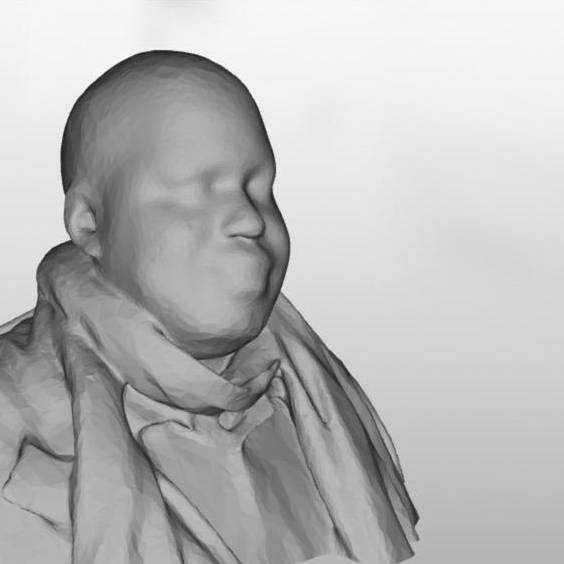


Wo mein geld?
This article seems to be targeted at brits but nevertheless, learning languages is good for many reasons. It’s also fun as long as it’s not something that happens under pressure.
Well, missing pronoun, ignoring capitalization… actually you owe us 10€. Haha! Nobody expects the German inquisition!
Scheiße :(
Wo Geld
It’s missing the verb and I’m not sure which pronoun you’re missing.
Grammatically correct would be “Wo ist mein Geld?” The “mein” is The missing pronoun.
But the “mein” is there and I wouldn’t call it a pronoun in this case. If it’s used before a noun like in “mein Geld” then it’s just a possessive determiner.
Since I have no clue what the latter is I sadly can not say if this is the case or not.
Determiners are a more general class of words that include for example articles. Mein is not acting as a pronoun in the example sentence but more like an article.
There are several different types of pronouns. What you are most likely thinking of is called a personal pronoun, ie. I, me, you, she etc. However “mein” is also a pronoun, it’s just not a personal pronoun, but a possessive pronoun. https://de.wikipedia.org/wiki/Pronomen#Untertypen In real life that kind of knowledge is mostly irrelevant, but its quite neat to have if you want to compare different languages and describe how they work.
Ja, kenne ich, traditionell wird das so genannt, aber ich bin der Meinung, dass das veraltet und verwirrend ist, ein Pronomen ersetzt ein Nomen, ein Possesivbegleiter fungiert eher als Artikel und ersetzt nichts.
https://de.wikipedia.org/wiki/Possessiv
Oh spannend. Davon hab ich noch nie gehört. Klingt einleuchtend
deleted by creator
https://www.youtube.com/watch?v=0AFZdFrfXoA
Was letzte Preis?
1 euro gib oder nimm
Ich schick mein Kuseng der holt das ab der ist dumm.
Super, heute abend möglich meierstraße 123
doesn’t pick up and never answers again
Sorry, die Oma der Tante meines Kusengs ist beim Angeln auf einem Aal ausgerutscht und er musste Sie ins Krankenhaus fahren.
Edit: honestly I don’t know how to answer this in german, haven’t learned how to express my condolences.