

The common kitchen appliance plays an outsized role in exposure to nitrogen dioxide, a toxic air pollutant.
Pollution from gas stoves accounts for more than half of some [US] Americans’ total exposure to nitrogen dioxide (NO2), a toxin linked to asthma, a study in the academic journal PNAS Nexus concludes. The findings, published this month, provide the first nationwide, community-level estimates of residential NO2 exposure.
every time this comes up a million people come out acting like heat from burning gas is somehow different from heat from a heating element or induction.
I just think fire is neat.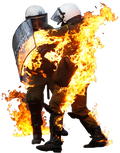
i will never understand why people feel the need to confidently state such demonstrably false things. anybody who’s ever cooked with both gas and electric will tell you that gas allows for much more precise control of heat and as a result makes cooking certain dishes much easier/more forgiving
that’s not to say that everybody should have gas – it’s bad for you and electric is better for that reason. but it’s not as if there’s no reason at all that gas became as popular as it did
It’s true that turning the dial on a gas stove gives you instant response on the size of the flame, but the flame is not what is cooking your food. The heat of your pan/pot is what is cooking your food, and that will rise/fall at the same rate based on its size and your current room temperature and altitude.
I cook with both on a regular basis. I’m telling you right now that if you think gas is more responsive you are responding to a placebo effect.
Gas and induction stoves produce a consistent level of heat, unlike glass/coil stoves that turn off and on during cooking. That won’t matter for something like a cast iron pan that’s heavy enough to stay hot, but cheap cookware can be light enough that it cools significantly when the cooktop switches off. I actually had a pot that couldn’t keep water boiling when the cooktop switched off. That wasn’t an issue when using that pot with a gas cooktop. Admittedly it also wasn’t an issue with cookware that didn’t bend during washing (yes it was that bad) but it is still something people might run into.
it matters for cooking in a wok because of the shape, and you have more fine control over the heat when it’s a gas knob instead of an electric thing that cycles on and off.
in some places being able to cook when the electricity goes out is nice.
I feel like a part of this depends on the types of electric stoves people have used. Flat stovetops with embedded heating elements or induction stoves are way way nicer in my experience than raised coil stoves. Probably a lot of the people who prefer gas have been using raised coils and not one of the better options
I hate my induction stove so much. Gas was way easier to handle.
Heat transfer is uneven, move the pan to balance it, stove shuts off.
Something boils over, if I wipe it away the stove shuts off.
Very different heating characteristics for each piece of cookware.
Coil sucks, but I hate the glass stove tops too if you’re a renter because it is a deposit trap. One little scratch and your landleech tries to take the whole deposit and you spend months fighting it. Also using a wok on a coil or glass stove top sucks in my experience, not a lot of non-gas western stoves seem to accommodate a wok all that well. I’ve seen a few induction stove tops that are built with a wok in mind, but landleeches never put those in apartments I have available to me.
flat bottom woks. Even with a gas stove, you’re not gonna get the same flavor as a Chinese restaurant at home, because they use very high powered flames. So there’s really no point in using a regular round bottom wok at home.
That’s a really good point as well. The same actually just happened to someone I know. At least with the coil the fix if you damage a burner is like 12 dollars or was last time I had to replace them