Yeah, but only because that land belonged to blacks and cut prospering communities in half to drown them in traffic hell. You wouldn’t want a repeat of that.
Rip out the extra lanes of the damn roads and highways that induced demand, and we got all the space we need without destroying much in the way of existing buildings. A double track is only about as wide as one lane of our surface stroads.
This. American roads are widened constantly for no reason other than paycheck justification. They could rip out existing highways (which cause lots of traffic) and replace them with trainlines.
I don’t see much of an issue since we already have 8 lane interstates connecting the vast majority of the cities in this country. The HSR could even connect with the light rail using existing bypasses. We have already emminent domained more space than we need, both inside and outside of the cities.
Easy? No. Easier than continuing to support a broken system of highways that hasn’t been revisited in policy since at least the 1970’s? Yes.
The double track I was referring to is the light rail that one would use in urban areas. HSR has no need to expand all the way into most city centers.
In the ideal situation where there are 8 lanes sustained throughout the entire proposed path, that still means removing at least 50% of the current inter city infrastructure. While adding more lanes is always a temporary fix, removing that substantial an amount is simply not feasible and the reason it hasn’t happened yet.
And yet it is possible and feasible in every other country, including ones like The Netherlands that followed us down our idiotic path, until the early 2000’s, and ripped out the roads and gave the cities back to all forms of transportation.
It isn’t possible because no one is willing to do it, other than some of the coastal cities on the west Coast, where it is slow, but works damn well.
when you are at an 8 lane highway, you are already so far down the wrong path that the status quo hurts as much as ripping the whole thing out and providing alternatives would.
Adding more lanes increases the amount of traffic. It’s not a fix for anything.
More lanes, more space, more people taking the route. It might seem counter-intuitive, but if you want to reduce traffic, you remove roads. Building viable alternatives to cars is the best way, fights pollution and congestion. People will use the trains, trams and buses, if good service exists.


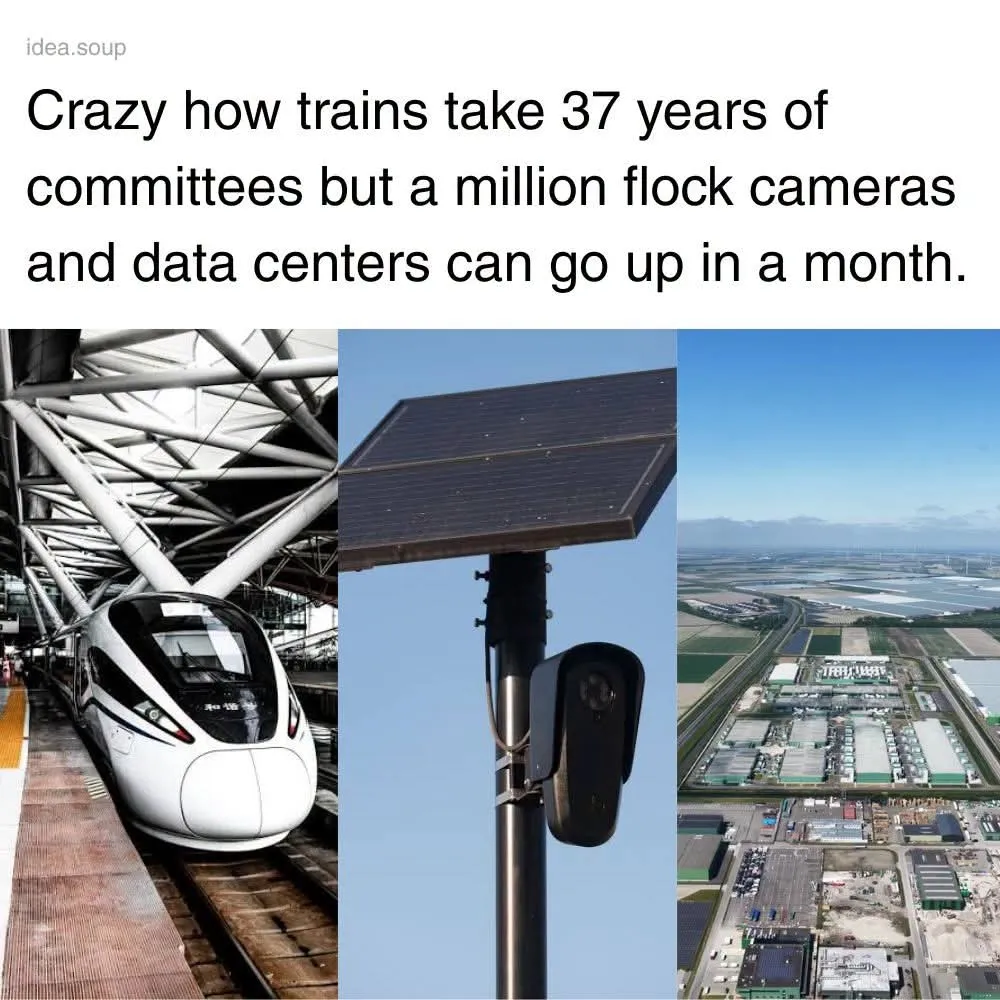
Yeah, but only because that land belonged to blacks and cut prospering communities in half to drown them in traffic hell. You wouldn’t want a repeat of that.
Rip out the extra lanes of the damn roads and highways that induced demand, and we got all the space we need without destroying much in the way of existing buildings. A double track is only about as wide as one lane of our surface stroads.
This. American roads are widened constantly for no reason other than paycheck justification. They could rip out existing highways (which cause lots of traffic) and replace them with trainlines.
One direction of high speed rail track would require at just under two freeway lanes worth of width (two directions need ~4 lanes).
And that’s before dealing with the additional freeway/rail safety separation, barriers, shoulders, drainage, etc.
While there are sections of highway that could support this amount of removal, if definitely not as easy as “swap road for track, done.”
I don’t see much of an issue since we already have 8 lane interstates connecting the vast majority of the cities in this country. The HSR could even connect with the light rail using existing bypasses. We have already emminent domained more space than we need, both inside and outside of the cities.
Easy? No. Easier than continuing to support a broken system of highways that hasn’t been revisited in policy since at least the 1970’s? Yes.
The double track I was referring to is the light rail that one would use in urban areas. HSR has no need to expand all the way into most city centers.
In the ideal situation where there are 8 lanes sustained throughout the entire proposed path, that still means removing at least 50% of the current inter city infrastructure. While adding more lanes is always a temporary fix, removing that substantial an amount is simply not feasible and the reason it hasn’t happened yet.
And yet it is possible and feasible in every other country, including ones like The Netherlands that followed us down our idiotic path, until the early 2000’s, and ripped out the roads and gave the cities back to all forms of transportation.
It isn’t possible because no one is willing to do it, other than some of the coastal cities on the west Coast, where it is slow, but works damn well.
when you are at an 8 lane highway, you are already so far down the wrong path that the status quo hurts as much as ripping the whole thing out and providing alternatives would.
Adding more lanes increases the amount of traffic. It’s not a fix for anything.
More lanes, more space, more people taking the route. It might seem counter-intuitive, but if you want to reduce traffic, you remove roads. Building viable alternatives to cars is the best way, fights pollution and congestion. People will use the trains, trams and buses, if good service exists.