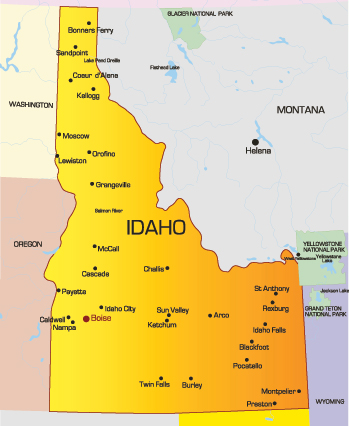
Image is of military and civilian sites across Caracas which were bombed by the United States as of last weekend.
As everybody has already known for a couple days, the US has abducted Maduro and his wife in a massive operation (of which the exact details are not currently known, but involved hundreds of aircraft and at least some bombing of military and civilian targets), and has threatened Venezuela and the socialist party with further abductions and widespread murder if they do not hand over control of the country directly to the United States. In a statement that really says it all, Trump said that Machado is not being considered for the colonial viceroy position due to her sheer unpopularity. Various parties and countries around the world - and inside the US - have expressed their disapproval, which, as we all know, will not shift US foreign policy a single iota.
A few months ago, when the pressure campaign on Venezuela began, I speculated that Maduro was going to be killed or captured eventually. Flagrantly illegal and violent American military campaigns in Latin America are not new. The US has been invading land, looting banks, assassinating democratically elected leaders, and otherwise overthrowing countries in the region for their own economic benefit for the better part of two centuries, under both Democratic and Republican parties. Unfortunately, we all know that Russia and China are unlikely to do anything meaningful to contest the US in their attempt to more violently assert hegemony in Latin America. I doubt very much that the China of today will come out to bat for Venezuela and start meaningfully pressuring the US economically. For better and worse, we are far from the days of the USSR.
However, Latin America has, historically, met the US in its radicalism, committed to wars of anti-colonial nationalism, and carried out successful revolutions against the dictators placed in control from the US. As history continues ever onwards and conditions develop, I can only assume that we shall once again enter that radicalizing cycle. In that vein, the big question on my mind, and everybody else’s, is: what comes next? Does the Venezuelan socialist party have the social and military cohesion to wage a years-long guerilla war against occupying troops? Can they quickly transition from a conventional to guerilla force as their military facilities are bombed, or will it take several years? Can they prevent the theft of their oil resources and make the attempt at foreign occupation more costly in both the manpower and economic costs than what that war will generate? Can Venezuela manufacture weapons for this guerilla war in a state of blockade? Will this military campaign begin immediately upon soldiers landing, or will it take a period of relatively unopposed occupation of months or even years? Will Cuba, Colombia, and even Mexico be in the same situation by the end of the year, with abducted leaders?
Yemen is the very recent proof that seemingly weak countries can force the American military to retreat in defeat. Can Venezuela follow? We shall see what Maduro has done to prepare the country for this war very soon. The only certain thing is that the murderous violence propagated by a trembling and dying empire shall be defeated eventually, whether it takes months, years, or decades, and the end result will be a socialist victory.
Last week’s thread is here. The Imperialism Reading Group is here.
Please check out the RedAtlas!
The bulletins site is here. Currently not used.
The RSS feed is here. Also currently not used.
The Zionist Entity's Genocide of Palestine
Sources on the fighting in Palestine against the temporary Zionist entity. In general, CW for footage of battles, explosions, dead people, and so on:
UNRWA reports on Israel’s destruction and siege of Gaza and the West Bank.
English-language Palestinian Marxist-Leninist twitter account. Alt here.
English-language twitter account that collates news.
Arab-language twitter account with videos and images of fighting.
English-language (with some Arab retweets) Twitter account based in Lebanon. - Telegram is @IbnRiad.
English-language Palestinian Twitter account which reports on news from the Resistance Axis. - Telegram is @EyesOnSouth.
English-language Twitter account in the same group as the previous two. - Telegram here.
Mirrors of Telegram channels that have been erased by Zionist censorship.
Russia-Ukraine Conflict
Examples of Ukrainian Nazis and fascists
Examples of racism/euro-centrism during the Russia-Ukraine conflict
Sources:
Defense Politics Asia’s youtube channel and their map. Their youtube channel has substantially diminished in quality but the map is still useful.
Moon of Alabama, which tends to have interesting analysis. Avoid the comment section.
Understanding War and the Saker: reactionary sources that have occasional insights on the war.
Alexander Mercouris, who does daily videos on the conflict. While he is a reactionary and surrounds himself with likeminded people, his daily update videos are relatively brainworm-free and good if you don’t want to follow Russian telegram channels to get news. He also co-hosts The Duran, which is more explicitly conservative, racist, sexist, transphobic, anti-communist, etc when guests are invited on, but is just about tolerable when it’s just the two of them if you want a little more analysis.
Simplicius, who publishes on Substack. Like others, his political analysis should be soundly ignored, but his knowledge of weaponry and military strategy is generally quite good.
On the ground: Patrick Lancaster, an independent and very good journalist reporting in the warzone on the separatists’ side.
Unedited videos of Russian/Ukrainian press conferences and speeches.
Pro-Russian Telegram Channels:
Again, CW for anti-LGBT and racist, sexist, etc speech, as well as combat footage.
https://t.me/aleksandr_skif ~ DPR’s former Defense Minister and Colonel in the DPR’s forces. Russian language.
https://t.me/Slavyangrad ~ A few different pro-Russian people gather frequent content for this channel (~100 posts per day), some socialist, but all socially reactionary. If you can only tolerate using one Russian telegram channel, I would recommend this one.
https://t.me/s/levigodman ~ Does daily update posts.
https://t.me/patricklancasternewstoday ~ Patrick Lancaster’s telegram channel.
https://t.me/gonzowarr ~ A big Russian commentator.
https://t.me/rybar ~ One of, if not the, biggest Russian telegram channels focussing on the war out there. Actually quite balanced, maybe even pessimistic about Russia. Produces interesting and useful maps.
https://t.me/epoddubny ~ Russian language.
https://t.me/boris_rozhin ~ Russian language.
https://t.me/mod_russia_en ~ Russian Ministry of Defense. Does daily, if rather bland updates on the number of Ukrainians killed, etc. The figures appear to be approximately accurate; if you want, reduce all numbers by 25% as a ‘propaganda tax’, if you don’t believe them. Does not cover everything, for obvious reasons, and virtually never details Russian losses.
https://t.me/UkraineHumanRightsAbuses ~ Pro-Russian, documents abuses that Ukraine commits.
Pro-Ukraine Telegram Channels:
Almost every Western media outlet.
https://discord.gg/projectowl ~ Pro-Ukrainian OSINT Discord.
https://t.me/ice_inii ~ Alleged Ukrainian account with a rather cynical take on the entire thing.
Forget it Jake, it’s efforttown. DM me to feature effort posts and good threads in the newsmega/newscomm here (including your own).
Note updated comm rules in the sidebar text.
@MarmiteLover123@hexbear.net with several posts (1 and 2 and 3 and 4) on US military technology they believe was used to kidnap Maduro. the US has had a lot of practice doing door kicking night raids over the GWOT
A good thread on Vietnam’s rising fortunes with commentary from @seaposting@hexbear.net and @xiaohongshu@hexbear.net, with particular focus on China’s efforts with Hainan island
@CleverOleg@hexbear.net on the way recent aggression against Venezuela tightens the screws on Cuba
Previous posts of the week: 2025: Oct 27 | Nov 3 | Nov 10 | Nov 17 | Nov 24 | Dec 1 | Dec 8 | Dec 15 | Dec 22 | Dec 29
Libs will be like “I don’t support Trump’s military action in Venezuela BUT (repeats every single justification for Maduro’s kidnapping)”
They’re the modern equivalent of “Will no one rid me of this meddlesome priest”
LMAO

The dialectics of history ------>

Venezuelan authorities have announced the full mobilization of the armed forces across the country in response to the recent US military attack. In a newly issued decree, the government imposed a temporary military regime over the oil industry and other key sectors deemed vital to national stability.
In a parallel move, Venezuelan security services have been ordered to pursue and detain individuals suspected of involvement in the US attack. A second decree, also published on the official legal portal, directs police forces at all levels to carry out immediate arrests nationwide.
PFLP:
The Popular Front condemns in the strongest terms the continued American bullying and blatant threats against Cuba, Colombia, and Mexico
The Popular Front for the Liberation of Palestine condemns in the strongest terms the continued American bullying and blatant threats targeting sovereign states, particularly Cuba, Colombia, and Mexico.
America is the “mother of terrorism” in this world. The kidnapping of the free and progressive Venezuelan President Nicolás Maduro and his wife is a criminal act that falls under the umbrella of organized state terrorism, and a clear declaration of the law of the jungle prevailing over international law. In light of this American rampage, international institutions and the United Nations lose their meaning and value unless they take action to deter this tyranny.
The Front expresses its full and deep solidarity with the Cuban and Venezuelan peoples, and with the fighters who have risen up against American crimes and confronted the brutal aggression targeting the president and Venezuela’s sovereignty. The Front affirms that the blood of dozens of Cubans and Venezuelans who have risen up to resist American aggression, defending Venezuela’s dignity and sovereignty, is a badge of honor for every free person in this world and a living embodiment of the unity of international destiny.
Confronting this American bullying is a major global responsibility. The peoples of the world and their living forces must rise up against the war criminals of the world, led by “Trump and Netanyahu”, who continue to commit war crimes and piracy without accountability.
The Front affirms that Venezuela will remain free, and that its kidnapped president, Nicolás Maduro, will remain its legitimate president. Venezuela alone has the right to determine its own destiny, choose its representatives, and protect its wealth from colonial plunder. In the face of this piracy and aggression, resistance in all its forms becomes a moral duty and an existential necessity.
From Palestine to Venezuela, and from Cuba to Lebanon and Tehran, the battle is one, and the international struggle must continue and escalate to confront colonial, imperialist, and Zionist oppression, until rights are restored and imperialism and Zionism are defeated.
The Popular Front for the Liberation of Palestine
Central Media Department
January 5, 2026
The vibes are off folks. 2026 is gonna be a hell of a year. Feels like we’re deep in the shit, 1937-type Nazi Germany seizing Czechoslovakia and Japan about to formally invade China, with no off ramp or end in sight, and nobody opposing any of it. I really have no idea what’s gonna happen next, but there is a major shift underway. Another Israeli strike on Iran feels appropriate, they’re usually quick to get in on any action, but who knows what this year has in store for all of us.
“Trumps regime” “Trumps government” “The US has become-” “Thanks conservatives”
MY BROTHER IN CHRIST YOUR COUNTRY WAS ALWAYS LIKE THIS, IT WAS JUST BETTER AT MASKING IT
EVEN OBAMA WAS BOMBING PEOPLE
YOU HAVE ALWAYS BEEN BAD
DO SOMETHING ABOUT IT
The most important thing if Trump annexes Greenland is that any Democrat that comes after won’t give it back.
I know, liberals will be physically incapable of remembering the event, let alone processing the contradiction, but it will still be an extremely visible example of imperial interests superceding every trapping of the US’s sham democracy.
And I also think, as the US gets more overtly brutal in winning its gains, even if the total body count is lower than in previous wars that had better PR, it will be harder to justify keeping those gains after the bloodied glove of the previous president is discarded and a fresh one put on, especially if they want to keep doing their cyclical Dem/Rep good cop/bad cop routine. Then again, we might just be heading towards the endgame now where the facade of pretending to care about international law is discarded by both parties.
Two people shot by border control agents in Portland: https://katu.com/news/local/ice-shoots-two-people-in-portlandoregon / https://www.reuters.com/world/us/us-federal-agents-shot-two-people-portland-abc-affiliate-reports-2026-01-08/
(first URL says ICE, but apparently this was CBP for any pedants out there)
The rank and file has heeded the message. Their impunity will be defended by the full might of the administration and aligned media.
Trump just told Sean Hannity that the US is going to begin conducting strikes on
American workers“cartels” in Mexico.We are now going to start hitting land, with regard to the cartels. The cartels are running Mexico. It’s very, very sad to watch and see what’s happened to that country, but the cartels are running it. They’re killing 250-300K people in our country every single year. The drugs, it’s horrible, it’s devastated families. You know, you lose a child, or a parent, I mean parents are dying too with drugs.
https://x.com/i/status/2009446503064949230
https://xcancel.com/i/status/2009446503064949230
I’m sure that, magically, everyone who isn’t a right-wing psycho will end up being in the cartel.
Consent Manufacturing for Iran on reddit is in full swing and swarmed by CIA bots.
ICE agents in Minneapolis shot and killed a woman this morning, details are still coming out. Reports I’ve seen on Bluesky from people in the area say she was a legal observer driving away from the crowd and agents when an ICE pig got in front of her vehicle and shot her through the windshield.
First report from local news: Person fatally shot by ICE agents in Minneapolis during ‘largest immigration operation ever’
“THERE WILL BE NO MORE OIL OR MONEY GOING TO CUBA - ZERO! I strongly suggest they make a deal, BEFORE IT IS TOO LATE,” Trump wrote on his Truth Social platform on Sunday.
The eye of Sauron turns to Cuba. This was always one of the goals of the Venezuela operation. This is Rubio’s endgame.
[CW: murder and grief. Family witnessing murder. Ignored pleas for help]
Probably already been said, but the victim that was murdered by ICE was a 37 year old woman. A mother. She was killed in front of her wife who was begging for help as the ICE bastards prevented medical attention from reaching her.