A reminder that as the US continues to threaten countries around the world, fedposting is to be very much avoided (even with qualifiers like “in Minecraft”) and comments containing it will be removed.

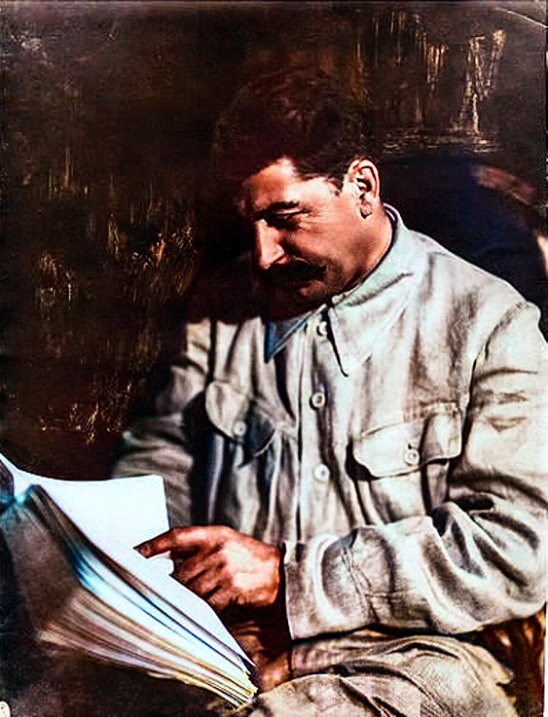
Image is of Iranian Foreign Minister Araghchi (below) and Iranian Speaker of Parliament Ghalibaf (above, right) in the Iranian parliament in 2024. These two figures have played a major role in the war so far.


My summary of the situation as I understand it is in spoiler tags below.

summary

After many long weeks, Iran and the US have agreed that they’re going to begin negotiations on certain topics in a process lasting at least 60 days. Due to America’s perfidy during previous negotiations, trust has broken down so far that Iran demanded $12 billion of their frozen funds and several other promises, such as the end to the naval blockade, to even return to the table, which seems perfectly reasonable to me. Iran also demanded that negotiations take place in two stages, and that nuclear issues will only be discussed in the second stage, which will be several weeks from now if everything goes as planned.

The terms of the MoU have themselves been a big source of confusion and suspicion, for me and many other pro-Iranian spectators. Getting the wording exactly correct is important, because the US really is like the devil - leave room for any possible interpretation in the contract that favors them more, and they’ll insist that this was the only interpretation up for discussion. Additionally, the US might be historically bad at winning wars, but they’re very, very good at winning peaces: they set up the post-WW2 order to best suit them by playing the European powers off each other; the DPRK might have survived the Korean War politically intact but existed for nearly the next hundred years as a sanctioned pariah; Vietnam was soon forced to economically engage with the country that had dropped triple of all the bomb tonnage of WW2 on them; and so on. It is no exaggeration when I say that the negotiation phase will be the most dangerous part of this war and it could lead to the most death and destruction without a single missile impacting Iran.

However, there’s one little genocidal colony in the region that could stop this whole process from even beginning, as the US appears to have promised Iran that the Zionists will stop the war against Lebanon (and perhaps Gaza too? I’m a little unclear) and even withdraw entirely from southern Lebanon, including all bases set up since this broader conflict began. Apparently, the US promised this in return for Iran not striking the Zionists in return for their most recent strike on Beirut on June 14th. Now, the issue with this whole situation is that the US greenlit the Zionist strike on Beirut, and they knew that Iran would respond to it because they did in response to an earlier strike. If the US made such major concessions to Iran in return for this response strike not occurring, then why authorize the Beirut strike at all? Why make their position worse? Right now, I can think of two reasons. First is that they attempted to create one final embarrassment for Iran, under the assumption that Iran was so desperate for a deal that they wouldn’t risk responding. Second is that this is all one big ruse or misdirection; the US does not intend to follow through with the MoU and subsequent negotiations anyway, and so the terms they’re “agreeing” to don’t really matter.

With the MoU signing apparently set for June 19th, we’ll know for sure soon.


Last week’s thread is here.
The Imperialism Reading Group is here.

Please check out the RedAtlas!

The bulletins site is here. Currently not used.
The RSS feed is here. Also currently not used.

The Zionist Entity's Genocide of Palestine

If you have evidence of Zionist crimes and atrocities that you wish to preserve, there is a thread here in which to do so.

Sources on the fighting in Palestine against the temporary Zionist entity. In general, CW for footage of battles, explosions, dead people, and so on:

UNRWA reports on the Zionists’ destruction and siege of Gaza and the West Bank.

English-language Palestinian Marxist-Leninist twitter account. Alt here.
English-language twitter account that collates news.
Arab-language twitter account with videos and images of fighting.
English-language (with some Arab retweets) Twitter account based in Lebanon. - Telegram is @IbnRiad.
English-language Palestinian Twitter account which reports on news from the Resistance Axis. - Telegram is @EyesOnSouth.
English-language Twitter account in the same group as the previous two. - Telegram here.

Mirrors of Telegram channels that have been erased by Zionist censorship.

Russia-Ukraine Conflict

Examples of Ukrainian Nazis and fascists
Examples of racism/euro-centrism during the Russia-Ukraine conflict

Sources:

Defense Politics Asia’s youtube channel and their map. Their youtube channel has substantially diminished in quality but the map is still useful.
Moon of Alabama, which tends to have interesting analysis. Avoid the comment section.
Understanding War and the Saker: reactionary sources that have occasional insights on the war.
Alexander Mercouris, who does daily videos on the conflict. While he is a reactionary and surrounds himself with likeminded people, his daily update videos are relatively brainworm-free and good if you don’t want to follow Russian telegram channels to get news. He also co-hosts The Duran, which is more explicitly conservative, racist, sexist, transphobic, anti-communist, etc when guests are invited on, but is just about tolerable when it’s just the two of them if you want a little more analysis.
Simplicius, who publishes on Substack. Like others, his political analysis should be soundly ignored, but his knowledge of weaponry and military strategy is generally quite good.
On the ground: Patrick Lancaster, an independent and very good journalist reporting in the warzone on the separatists’ side.

Unedited videos of Russian/Ukrainian press conferences and speeches.

Pro-Russian Telegram Channels:

Again, CW for anti-LGBT and racist, sexist, etc speech, as well as combat footage.

https://t.me/aleksandr_skif ~ DPR’s former Defense Minister and Colonel in the DPR’s forces. Russian language.
https://t.me/Slavyangrad ~ A few different pro-Russian people gather frequent content for this channel (~100 posts per day), some socialist, but all socially reactionary. If you can only tolerate using one Russian telegram channel, I would recommend this one.
https://t.me/s/levigodman ~ Does daily update posts.
https://t.me/patricklancasternewstoday ~ Patrick Lancaster’s telegram channel.
https://t.me/gonzowarr ~ A big Russian commentator.
https://t.me/rybar ~ One of, if not the, biggest Russian telegram channels focussing on the war out there. Actually quite balanced, maybe even pessimistic about Russia. Produces interesting and useful maps.
https://t.me/epoddubny ~ Russian language.
https://t.me/boris_rozhin ~ Russian language.
https://t.me/mod_russia_en ~ Russian Ministry of Defense. Does daily, if rather bland updates on the number of Ukrainians killed, etc. The figures appear to be approximately accurate; if you want, reduce all numbers by 25% as a ‘propaganda tax’, if you don’t believe them. Does not cover everything, for obvious reasons, and virtually never details Russian losses.
https://t.me/UkraineHumanRightsAbuses ~ Pro-Russian, documents abuses that Ukraine commits.

Pro-Ukraine Telegram Channels:

Almost every Western media outlet.
https://discord.gg/projectowl ~ Pro-Ukrainian OSINT Discord.
https://t.me/ice_inii ~ Alleged Ukrainian account with a rather cynical take on the entire thing.


  • companero [he/him]@hexbear.net
    link
    fedilink
    English
    arrow-up
    26
    ·
    55 minutes ago

    CNN: B-52 bomber crashes shortly after takeoff at California’s Edwards Air Force Base, military says

    It is not immediately clear if there are any injuries. CNN has reached out to the base for more information.

    The crash left a towering black plume at Edwards Air Force Base, located in California’s Mojave Desert, northeast of Los Angeles. The runway at the base was left with a large blackened scar and smoke, but it was difficult to make out any distinct parts of the wreckage, video from CNN affiliate KCAL shows.

    Before Monday’s crash, the most recent fatal accident involving the aircraft was in 2008, when six Air Force personnel were killed after their B-52 crashed into the Pacific Ocean off the coast of Guam while preparing for a parade flyover.

  • HarryLime [any]@hexbear.net
    link
    fedilink
    English
    arrow-up
    14
    ·
    35 minutes ago

    Netanyahu warns fight against Iran ‘not over,’ vows continued occupation in Lebanon: The prime minister claimed he saved Israel from ‘nuclear annihilation’ while boasting of ‘destroying’ Iranian military capabilities

    Israeli Prime Minister and wanted war criminal Benjamin Netanyahu declared during a news conference on 15 June that Tel Aviv has its “own interests,” stressing that his “struggle” against Iran is “not over.”

    “The agreement with Iran was made by Trump, and this is his decision; we have our own interests,” Netanyahu said.

    He also claimed he was “not sure about the details of the agreement between Washington and Tehran," while at the same time telling reporters that the framework aligns with the war goals defined by the Israeli cabinet.

    “I did not say that one of the objectives of the operation was to overthrow the Iranian regime,” he claimed, contradicting comments made early in the war.

    “It did not go wrong at all. I defined the goals — and the cabinet defined the goals — differently from what you said,” he told a reporter.

    “Many times, we see eye to eye, and there are also cases in which we see less eye to eye. I am responsible for Israel’s security interests. I stand up for them,” Netanyahu added in response to a question on his relationship with Trump.

    “When necessary, I stand firm on our security interests.”

    The premier went on to repeat what his war minister and other officials said earlier on Monday, vowing to continue the occupation in south Lebanon.

    “We established deep security zones around Israel… in Gaza, in Lebanon, in Syria … We will remain in the security zones for as long as necessary to protect our country.”

    He added that Tel Aviv “will continue to thwart threats in the region, build new alliances with countries in the region and outside the region, and ensure our security independence.”

    He then boasted that Israel “took control of key areas in Lebanon from which Hezbollah had threatened Israel."

    Hezbollah resistance fighters remain entrenched across Lebanese villages occupied by Israeli forces, and confronted new Israeli advancement attempts on 15 June.

    "We are working to maintain freedom of military action [in Lebanon] and to continue enjoying it,” Netanyahu alleged.

    The embattled premier also assured reporters that Tel Aviv continues its work to find solutions in dealing with the threat of Hezbollah’s FPV drones and other weapons, which have inflicted serious losses on the occupation forces.

    The prime minister boasted about Israel’s strikes on Iran during the war.

    “We launched the largest attack operation in Israel’s history. We targeted the nuclear scientists; we eliminated the leaders of the terror regime; we crushed nuclear facilities; we destroyed missiles and the vast majority of factories that produce missiles. We struck countless military industries and infrastructures. We destroyed their navy, their air force,” he proclaimed.

    His comments contradict US media reports, which cite intelligence assessments as saying that Tehran has retained significant military capabilities and has successfully restored missile sites bombarded during the war.

    “We eliminated base commanders who massacred the Iranian people. We caused enormous damage — [some] estimate it in the hundreds of billions of dollars, some estimate it at even close to a trillion dollars — to Iran’s economy,” Netanyahu claimed.

    Additionally, he claimed the strikes on Iran “saved” Israel from “annihilation” and prevented Tehran from obtaining a nuclear weapon.

    US intelligence has repeatedly concluded that Tehran is not looking to weaponize its nuclear program.

    The Memorandum of Understanding (MoU) between Tehran and Washington reportedly does not cover Iran’s ballistic missile program or its backing of regional allies, which are key Israeli demands that Tel Aviv had been urging Washington to address.

    Iranian media reports say Washington has capitulated to the Islamic Republic’s demands, including ending the war in Lebanon.

    Israeli War Minister Israel Katz vowed on 15 June that Tel Aviv will not withdraw occupation forces from south Lebanon and will strike the Islamic Republic with “full force” if it responds to violations in Lebanon, as it did earlier this month.

    “During his conversation with Trump … Netanyahu made clear that Israel does not consider itself bound by the Lebanon-related clause of the US–Iran agreement,” Maariv newspaper reported.

  • Redcuban1959 [any]@hexbear.netM
    link
    fedilink
    English
    arrow-up
    10
    ·
    33 minutes ago

    Argentina bids farewell to Taty Almeida, a historic leader of the Mothers of Plaza de Mayo (Founding Line). Her lifelong struggle for memory, truth, and justice left an enduring mark on Argentina and beyond.

  • cosmosaucer [he/him]@hexbear.net
    link
    fedilink
    English
    arrow-up
    52
    ·
    2 hours ago

    —❗️🇮🇱/🇱🇧 BREAKING: ‘We will remain in the occupied areas in Lebanon. We will maintain the security zone.’ – Netanyahu

    @Middle_East_Spectator

    that didnt last long

  • HarryLime [any]@hexbear.net
    link
    fedilink
    English
    arrow-up
    33
    ·
    2 hours ago

    1/I listened to the senior Trump administration officials’ call about the latest with Iran. I am in some ways more confused now than before the call. A few thoughts:

    2/They suggested the MOU lays the groundwork for a radical reshaping of the US-Iran relationship as well as Iran’s role in the region. But they seemed to act as if the US had won this confrontation, whereas the Iranians seem to think they have the upper hand.

    3/Their comments were unclear on the status of the MOU. They said the details will be released in the next 24-48 hours, but that “this is really just the first MOU. And then we’re going to launch into the real technical discussions later this week that the Vice President will continue to lead these negotiations.”

    4/They do not seem to have a good grasp of US sanctions law. They laid out the possibility of a $300 billion investment fund for Iran. And one said at one point that “the sanctions relief is not tied specifically to any particular conduct. It’s tied generally to them behaving more appropriately, and obviously the thing that we care the most about is the nuclear program.” But sanctions are specific to particular conduct.

    5/They said “one of the really cool things and interesting things about this entire process is that we actually have a direct relationship with a number of people at the highest levels of the Iranian government. That really hasn’t happened in 47 years of our relationship with Iran.” This is not a huge thing, but it suggests they haven’t really done their research on US-Iran relations. (See: JCPOA talks.)

    7/One SAO suggested that some Iranian leaders want to give up the nuclear route & echo Gulf Arab state econ models. This was fascinating & at odds with what many analysts believe: “There’s not as much commitment to the old pathway of the old Supreme Leader, and I think that there’s a lot of new people in there saying, well, this is stupid. It hasn’t worked and hasn’t yielded results.”

    8/Why do I suspect they haven’t really studied the JCPOA & Iran-US history? Because of statements like this: “If you go back to the JCPOA, the Supreme Leader just doesn’t sign these agreements.” But nobody signed the JCPOA. It was a political arrangement, not a signed accord.

    9/Don’t even get me started on the references to the GCC.

    10/It seems they want to have some early confidence building measures, which is normal: “I think what you’ll see is that we are prepared to release frozen funds, and we are prepared to release sanctions, and we’ll do some small gestures of that in the beginning, if they make some small gestures to us.” BUT …

    11/they don’t seem to have sorted that out just yet: “that’ll be based on performance that we get together this week and talk about what we want to do and when we do it.”

    12/This was a somewhat clarifying statement re: Israeli forces in Lebanon: “Their withdrawal was not a condition of the deal. The deal is a ceasefire, and it will not be a one-way ceasefire, meaning that if Iran is not able to control Hezbollah, and if they attack Israeli positions or Israeli towns, Israel will have the right to defend themselves and respond.”

    13/They sounded many hopeful notes, which is a rarity in this situation: “Hopefully, we can find a way to create a new framework for the region based on modern times, modern aspirations, and people don’t need to kind of create these instability against an enemy, maybe they can focus on having a real peace.”

    14/And: “We really do want to get to a place where we can unsanction a lot of the Iranian economy, where we can unfreeze these assets, but it requires the Iranians to do some of the things that they’re promising to do.” (My take: You know what? If the Knicks can win the NBA Championship after more than 50 years …)

  • Redcuban1959 [any]@hexbear.netM
    link
    fedilink
    English
    arrow-up
    39
    ·
    3 hours ago

    A U.S. official also told Reuters that withdrawal from Lebanon is not part of the MoU, confirming the statement by Israel. If it isn’t, then why did Iranian officials say it is? And what was that alleged ‘last minute concession’ given to prevent an attack on Israel?

    For me, nothing in this deal is more important than Lebanon. I don’t care about the money or sanctions relief or even Hormuz if there’s no peace in Lebanon.

    What could be is that Iran and the U.S. did agree on an Israeli withdrawal from Lebanon, but that Israel is allowed to present it as a separate agremeent with the Lebanese government, having Aoun announce it in a week or two, so that Iran doesn’t get any credit.

    • Middle East Spectator
    • THEPH0NECOMPANY [he/him, comrade/them]@hexbear.net
      link
      fedilink
      English
      arrow-up
      23
      ·
      2 hours ago

      Hmmm from my understanding Trump personally called Iran up and made this deal yesterday, and with all the concessions he gave to Iran there’s no way Lebanon isn’t part of the deal.

      This feels like Israel using domestic US leverage to try to gum up any deal. Idk for sure though it’s hard to tell with how fickle Trump can be, but I don’t see him releasing funds to Iran and not being serious about a deal

    • WalrusDragonOnABike [they/them]@reddthat.com
      link
      fedilink
      English
      arrow-up
      27
      ·
      3 hours ago

      If Lebanon isn’t part of the agreement, then I’m sure the US would have no problem if gas/water infrastructure in Israel and gulf monarchies are targeted by Iran and no issue if Iran helps with closing Bab-el-Mandeb since they surely weren’t part of it either.

      • mkultrawide [any]@hexbear.net
        link
        fedilink
        English
        arrow-up
        2
        ·
        14 minutes ago

        I suspect that Iran isn’t going to significantly target water infrastructure in Israel unless things get dire, because Palestinians also rely on that infrastructure. Through its destruction of any Palestinian infrastructure, they are able to use Palestinians as human shields against anyone would both realtaliate against the cancerous state and who cares enough about Palestinians to reconsider the ramifications of destroying water infrastructure.

  • Redcuban1959 [any]@hexbear.netM
    link
    fedilink
    English
    arrow-up
    33
    ·
    3 hours ago

    Vice President JD Vance on Iran: We are seeing both Iranian hardliners and political leaders saying, “Our relationship with the U.S. over the past 47 years has been a mistake. Let’s turn over a new leaf.”

    CBS: The Iranians are saying they’re gonna have access to a $300 billion reconstruction fund. True or false?

    JD Vance: That’s the sort of things they could have access to, so long as they honor their end of the obligation.

    • Middle East Spectator
  • Redcuban1959 [any]@hexbear.netM
    link
    fedilink
    English
    arrow-up
    36
    ·
    3 hours ago

    Hezbollah in its first military statement since the ceasefire:

    ‘In defense of Lebanon, and based on the legitimate right to resist occupation and liberate the land, and in response to the Israeli enemy’s violation of the ceasefire:

    After monitoring an Israeli force consisting of a bulldozer and two Merkava tanks advancing from Hamat Arnon, the checkpoint near the border in the outskirts of Kafr Tannin, fighters of the Islamic Resistance attacked them with ATGMs and Ababil-1000 guided drones, forcing them to retreat.

    • Middle East Spectator
    • VComrade [he/him]@hexbear.net
      link
      fedilink
      English
      arrow-up
      36
      ·
      3 hours ago

      It’d be funny if Iran did the same thing Israel is doing with Lebanon…“oh, they weren’t part of the deal. They can continue hitting Israel.”

  • Redcuban1959 [any]@hexbear.netM
    link
    fedilink
    English
    arrow-up
    28
    ·
    3 hours ago

    Without thanking Iran, Lebanese Prime Minister Nawaf Salam accepts the ceasefire agreement in Lebanon as part of the Iran-U.S. Memorandum of Understanding and says the Lebanese government will work to ensure that Israel abides by withdrawing from Lebanese territory

    — For the Strait of Hormuz, there is one issue.

    How will Iran enforce its control if the credible threat of military force is gone? Vessels can just take the Omani route and not coordinate with Iran at all. Let’s see how Iran solves this.

    • Middle East Spectator
  • Yllych [any]@hexbear.net
    link
    fedilink
    English
    arrow-up
    30
    ·
    3 hours ago

    Marxist Michael Roberts was interviewed by the Chinese Academy of Social Sciences, here is a translation of the interview from his website.

    spoiler
    1. Michael Roberts, thank you for your time! Could you briefly tell us when you got to know and accept Marxism and what impact did your previous job in the City of London have?

    If you have a Marxist insight into the workings of finance capital, you are much less likely to assume that all will be well with financial investment. One lesson for workers that I learnt and this applies to China too: stay out of financial markets. Even better, workers’ pension funds should not rely on stock market investing as these funds continually lose workers’ contributions by doing so. But it works the other way too. A close understanding of the workings of the financial beast can help us explain better the fragilities and speculations of the system.

    1. What do you think is the core idea of Marxism? What’s the relationship between historical materialism and the critique of political economy?

    The core ideas of Marxism can be reduced to two key concepts.

    First, the history of human organisation since primitive times is the history of class struggle. The materialist conception of history is that change for better or worse is driven by the material interests of classes and, in particular, by the ruling class (feudal lords, capitalist companies) and the working class. While individuals can play key roles at moments in history (decisions and actions by kings or by revolutionary leaders), in the final analysis, change depends on economics and classes. As Marx said: “men make their own history, but they do not make it as they please; they do not make it under self-selected circumstances, but under circumstances existing already, given and transmitted from the past.”

    The second core idea is the law of value under capitalism. Capitalism is a system of production for the profit of the owners of the means of production, who exploit those who own nothing but their ability to work for the owners. Labour creates all the things and services that we use and need, but the value of that labour is appropriated by the owners of the means of production as ‘surplus value’ over and above what labour receives for its work. That surplus value is accumulated as capital. Our social needs then depend on the decisions of capitalists on whether it is profitable or not. This explanation of the workings of the modern economy is denied by the apologists for capitalism – but it is compellingly clear.

    1. The theory of crisis is an important part of Marx’s critique of political economy. There have been many debates among Marxists on how to understand Marx’s theory of crisis. What do you think of Marx’s theory of crisis, and the relationship between overproduction, underconsumption, and the tendency of the rate of profit to fall?

    Yes, a theory of crises under capitalism is very important. The apologists for capitalism deny that there are any endemic crises in capitalist production – ie regular and recurring slumps in production, investment and employment. For them, such crises are either random events, one-offs or the result of bad decisions, speculations or negligence. The apologists deny that crises are inherent in the capitalist system of production for profit. But Marx’s law of value reveals why regular crises are endemic. Capitalist production only takes place if profits are made and Marx shows that a contradiction arises between the drive for more production and profitability of that production (ie profits relative to capital invested). Capitalists compete against each other to gain market share and a bigger cut in the profits appropriated from workers. In order to gain an advantage, they resort to using labour-saving technology to reduce costs and increase the productivity of labour. But Marx argued that profit only comes from labour going to work, so if investment is increasingly in machines etc relative to labour, productivity may rise but at the expense of a tendency for profitability to fall. Eventually, profitability may fall so much that it causes a fall in total profits. Then capitalists stop investing, close down production and lay off workers. Unemployment rises alongside unsold goods and services. This is a slump. It can only be rectified by getting profitability rising again and that requires removing unnecessary workers, weak companies and keeping wages down. Then the whole process can start again. Slumps are a necessary ‘cleansing’ process for capital to recover. Marx outlines his theory of crises most clearly in Capital Volume 3, Chapters 13-15.

    However, many Marxists do not accept that the law of tendency of the rate of profit to fall as explained in these chapters is relevant to crises in capitalism. Instead they consider two other main theories. The first is that there is ‘underconsumption’. This is when workers cannot buy back all the goods and services produced by the capitalists because they do not have enough money. Both Marx and Engels disputed this underconsumption theory, pointing out that workers will never have enough money to buy back all the output being sold, precisely because wages do not contain all the value created and realised as the capitalists have appropriated any surplus value (the difference between the value of commodities sold and wages going to the workers; in other words, profits). The point is that capitalists do not need to sell all their commodities to workers; much of sales is to other capitalists (eg steel is sold to auto manufacturers to make cars etc).

    The other alternative theory is that of ‘overproduction’. Capitalists just keep producing to accumulate more profits without considering whether they can sell their production on the market. They overproduce relative to demand. The problem with this explanation of crises is that it does not explain when production becomes ‘too much production’. It may never happen, or it could happen at any moment. There is no logic to this theory. Put it this way, if supply is in line with demand, can there still be a crisis of investment and production in capitalism? Marx would say yes, because the profitability of what is being produced is what decides whether capitalists invest or not. Indeed, this is how crises unfold. Profitability falls, then total profits and then capitalists try to sell more to cover falling profits. But that means ‘overproduction’, forcing capitalists to lower prices and/or cut production. Overproduction is the result of the overaccumulation of capital ie falling profitablity of capital invested, not the other way round.

    1. In 2020, you published the book Engels 200 – His Contribution to Political Economy, in which you systematically introduced Engels’ research on political economy and his contribution to Marxist political economy. However, there is a view that the crisis caused by the rate of profit to fall is actually Engels’ viewpoint, and he exaggerated or even tampered with Marx’s discussion on the tendency of the rate of profit to fall when editing volume 3 of Capital. What do you think of this viewpoint?

    This view has been expressed by several Marxists (in particular, the German Marxist scholar, Michael Heinrich) who claim that they have read unpublished papers by Marx that apparently show Engels changing Marx’s words to make the law of the tendency of the rate of profit to fall appear more important. These Marxists also claim that Marx actually abandoned the law in the 1870s and so it should not be considered relevant to Marxist economics and crisis theory.

    But other scholars have shown clearly that Engels did not engage in any significant distortion of Marx’s text as in Chapters 13-15 of Volume 3 where the law of profitability is spelt out. And there is no evidence that Marx dropped the law in the 1870s – on the contrary, he conducts further work on it. For example, in the 1870s, Marx spent considerable time looking at the rate of profit with various mathematical formulas. When Engels came to edit Capital Volume 3, he excluded Marx’s mathematical work on the rate of profit, even though it would have confirmed that Marx still held to his law. All this is explained in my book, Marx 200 and in my book Engels 200, with all the references.

    The Marxists who push this have also bent Marx’s law of value into a theory of money ie. value is not created by labour in production, but instead is only realised in selling commodities produced on the market. So no sale, then no value. This was not Marx’s view. Value is the result of the effort of human labour in production; how much of that value is eventually realised depends on sale in the market. But there is no value at all without human labour production. Behind this revised theory is an attempt to replace profitability as the ultimate cause of crises with a theory of monetary or credit instability, similar to the view of mainstream economists like Keynes.

    Continued below

    • Yllych [any]@hexbear.net
      link
      fedilink
      English
      arrow-up
      15
      ·
      3 hours ago
      spoiler
      1. From your point of view, what are the main differences between Marxist political economy and other schools of economics (like neoclassical economics, Keynesianism, etc.)? Can we regard the theory of crisis as an important difference or even essential difference between Marxist political economy and mainstream Western economics?

      The key difference above all is that other schools of economics, even the most radical ‘heterodox’ schools that do not accept that markets are perfect, do not agree with Marx’s law of value. They do not accept that the key contradiction of capitalist production is production for profit, not social need and that increased production eventually comes into conflct with increased profitability and that is what leads to booms and slumps, ie crises. The mainstream neoclassical school deny crises can happen in properly run markets or in markets that are not interfered with by governments, monopolies or trade unions. Heterodox economists deny the role of profit in crises and look to either a ‘lack of demand’ (Keynes); or financial instability (Minsky) or monopolies (Sweezy, Stiglitz) or bad regulation.

      And this is a crucial difference, because all these schools are suggesting that capitalist production can be modified or corrected to make capitalism work better. Keynes said more government spending or monetary injections will do the trick; heterodox Minsky said: regulate the banks and finaancial institutions, then capitalism will be stable. These reformist approaches are theoretally and empirically wrong. Marx’s theory of crisis shows that capitalism cannot be reformed in that way. Crises are endemic to capitalism because ultimately they are caused by falling profitability. The only way to end crises is to replace capitalism with a planned economy under common ownership ie no capitalists.

      1. In your research, what impacts does the financialization of capitalism have on the real economy and the working class?

      One of the features of the last 50 years in modern economies in the Global North has been the rise of the financial sectors, not just banks but hedge funds, investment funds, insurance funds, private equity, cryptocurrencies etc. Increasingly, capitalists have switched their investment of accrued profits into financial assets and speculation rather than into investment into new technology and productive sectors. This is the phenomenon of ‘financialisation’.

      However, some Marxists and others have been so enamoured by this development that they have started to claim that capitalism has changed its spots. It is no longer a system of production for profit through the exploitation of labour in factories, offices etc, but now it is just a financial monetary system where money makes more money. This means that workers have lost their role as producers of value in capitalism. Now capitalists can get value just from monetary tricks. Capitalism has become finance capital, which rules over producer capital.

      This is nonsense. Although financial profits in some economies like the US and the UK are large, say up to 25% of total profits, the vast majority of profits are still made by selling goods and services produced by workers. And that is especially the case in the so-called Global South where manufacturing has become predominant, not finance. Globally, the working class has never been larger and still most capitalist accumulation comes from the labour of working people in production. The leopard of capitalism has not changed its spots.

      1. What do you think of the current crisis of capitalism in the global economic system, especially the financial crisis in recent years? What insights can Marxist political economy provide for us to understand the crisis of capitalism?

      This is a big subject. In the 21st century we have had the two biggest slumps in the history of capitalism, 2008-9 and 2020. There is every reason to expect that another slump will take place before the end of this decade. That may be triggered by a new financial crash as in 2008. This time that crash may not start in the banks as such but be engendered by rising corporate debt and the cost of servicing that debt. Already, there are around 20% of companies in Europe, Japan and the US that are called ‘zombies’ ie they are like the living dead because they do not make enough profits to cover even the cost of servicing their existing debt and so must keep borrowing.These companies are in serious risk of going bust and bringing down even profitable companies in a ricochet effect.

      1. You think that since the end of the Great Recession in 2009, the major capitalist economies have been in a Long Depression. Is there any difference between the Long Depression and previous long depressions in the history of capitalism? What strategies should China adopt in response to the global impact of the Long Depression?

      I define a depression as opposed to a recession or slump as a period where after a slump, the previous trend of growth in output, investment and above all profitability, is much lower than before the slump. And this lower trend can last for decades. In that sense, the Long Depression of the 2010s onwards that I have identified is similar to the depression of the late 19th century (1873-97) and the Great Depression of 1929-42. As of 2025, the current depression is continuing as the pandemic slump of 2020 did not lead to a significant rise in profitability and so investment growth and real GDP growth remain even weaker than in the 2010s.

      China has avoided all these crises in capitalism. That’s because China has an economy dominated by a large state sector and planning by the government, so that any instability in its capitalist sector can be overcome and investment and production can carry on relatively uninterrupted. If the capitalist economies of the West head into another slump, then trade and investment into China will be hit, but China now has a massive domestic base and it has invested heavily into new technologies and continues to direct and plan that investment mainly through the state sector. China needs to expand the state sector and planning to reduce the instability in its capitalist sector, particularly exposed by its plunging real estate sector (mostly capitalist based).

      1. Digital currency and blockchain technology have been hot topics in the field of financial technology in recent years, and they have had a profound impact on the global economy and financial system. What is your opinion of these financial innovations and digital finance?Will they lead to a more serious global economic crisis?

      Cryptocurrencies, as they are called, like bitcoin, are just another form of speculative financial asset like gold or paintings. They are not alternative forms of money that could replace state issued currencies (fiat money) like the dollar or yuan. Digital currencies in general already exist in one form ie you pay your bills by card, phone or bank transfer without any paper money involved. The possible new development would be a central bank digital currency that bypasses commercial banks. So far, that development has made limited progress. In the meantime, cryptocurrencies are yet another form of what Marx called ‘fictitious capital’ that adds yet more risk of a financial crash down the road.

      1. Given the increasing popularity of artificial intelligence and automation, how to apply Marxism to analyze the impact of technological progress on production modes and social relations?In your research, what is the correlation between technological progress and economic growth?

      This is complicated. Artificial intelligence (AI) is just a new form of technology aimed at replacing human labour and increasing the productivity of labour and so raising the rate of exploitation on labour by capital. New technology can lead to huge job losses, especially for those in industries and occupations it replaces, but it can also, over time, create new industries and employment. Consider the industrial revolution, the electricity revolution, the auto industry, computer revolution. Technology has always been key to economic growth by raising the productivity of labour, especially when the size of the labour force stops rising – as in China today.

      It is argued that AI is a completely new development that will replace human labour altogether because it can supersede human intelligence. The evidence for this is doubtful. Much of AI is just a fast processing of existing human knowledge and cannot replace the imaginative nature of human intelligence. Also, AI will take some time, even decades, to diffuse its productivity-enhancing effects through economies. In my view, it is not a ‘game changer’ that can save capitalism.

      • Yllych [any]@hexbear.net
        link
        fedilink
        English
        arrow-up
        13
        ·
        3 hours ago
        spoiler
        1. Technofeudalism is a view that has emerged in recent years to describe the changes of society caused by cloud technology, that is, tech giants and large platform enterprises possess the data and power like feudal lords, while ordinary users serve these digital overlords as unpaid data producers like serfs, and the new form of rent replaces profit as the main form of accumulation. Do you agree with using technofeudalism to define the current stage of western society?

        Technofeudalism as a concept suggests that capitalist production, ie production for a profit through the exploitation of labour, has been replaced by a feudalism where digital monopolies just extract rents. But where do these rents come from? Marx pointed out that rent, interest and profits all come from the same source: the surplus value appropriated from the value created by human labour power. It is just wrong to argue that companies selling cloud technology are not producing commodities for sale and profit just like any capitalist process. The bulk of Amazon’s profits come from distribution and transport of things; the bulk of Facebook’s profits come from advertising; the bulk of Google’s too. The bulk of Microsoft and Apple profits are from selling computer hardware and software. This is not feudalism but straightforward capitalism. Capitalism is not dead and to suggest that it is a dangerous idea for workers because it means labour may not see its enemy as capital as a whole, but just a small part of capital, so that there is no need to replace capitalism but just ‘feudal monopoly’ capitalism.

        1. The labor theory of value is the core idea of Marxist economics. In time of automation and the digital economy, how to apply the labor theory of value to analyze modern economy? What do you think of data as a new factor of production?

        Data or knowledge comes from human activity. So knowledge has value in the same way that physical things have value for society and for capital. Knowledge is material: it requires the energy of human labour; ie. mental labour, in the same way as physical labour. Both are material and create value. So capital can appropriate surplus value from knowledge workers that it employs and does so increasingly across industries and the world. Such surplus value is embodied in patents, intellectual property rights etc. Knowledge or mental labour is just as ‘material’ as physical labour. Mental activity takes place in the synapses of the human brain and is combined with physical labour using a computer etc. So mental labour creates value just as much as physical labour. And knowledge workers are just as much part of the proletariat as manual workers doing physical tasks.

        Indeed, mental labourers are being exploited increasingly by capital to appropriate surplus value (profit) .So there is no need to invent a new term for the working class such as a ‘multitude’. This implies that the working class, those who only make a living by selling their labour power and own no means of production, no longer exist. This term hides the class struggle between labour and capital, thus confusing the need to replace capitalism.

        1. Has the development of the digital capitalism widened the North-South divide?

        Yes, it is widening that divide. But that divide is widening anyway. The Global South (with the exception of China) is not catching up with the Global North however you measure it: by GDP per person; by productivity per worker; by income per person; by reducing inequality. The North-South divide is expressed in the control of an imperialist bloc of economies with relatively low population dominating the rest of the world which has the bulk of humanity.

        1. What economic policies do you think president Donald Trump will adopt, and what impacts will these policies have on the global economy?

        We cannot be sure what Trump will do. But he says he is going to apply huge tariffs on US imports, particularly those coming from China. He claims his aim is to get US industry back to where it was at the expense of the rest of the world. Above all, he wants to continue the policy of previous US administrations to strangle, choke and reverse the economic progress of China, which is seen as the main threat to US hegemony. Indeed, Trump will also back further military provocations to restrict China. Domestically, he aims to cut corporate taxation so the rich and big business pay even less than now and do away with regulations on industry and global warming abatement. His Cabinet is composed completely of billionaire hedge fund and private equity managers who will seek to benefit the rich at the expense of most Americans.

        Worldwide, if Trump does follow through with these policies, then world trade will fall back and tensions between the US-led Western alliance and China will rise dangerously. Inequality of wealth and income between countries and within countries will increase and the wars in Ukraine and the Middle East will continue, with the risk of war in Asia too.

        1. Will Trump’s promised economic policies, such as massive tax cuts and increased military spending, pose a threat to global economic stability by leading to higher global debt levels?

        Yes, global debt is already at record highs and relative to global output. In particular, the US government is running sizeable budget deficits in order to finance the war in Ukraine and for Israel and it plans massive increases in military spending to fund further action globally. Trump wants Europe to pay more for this, but in the meantime, US public debt is hitting all-time highs and the cost of servicing that debt in interest is now surpassing government spending on education and health and other public services.

        1. Will Trump’s economic policies worsen the contradictions of the global capitalist system, leading to overproduction and the tendency of crisis?

        All this is against a global background of low growth and trade, poor investment and productivity growth. The major capitalist economies, with the possible exception of the US, are stagnating or even in outright recession, especially in Europe. There is every possibility that these economies will face a serious slump by the end of this decade, which will spill over to the rest of the world, as happened in 2008 and 2020. Only China can hope to ride through that.

        1. Do Trump’s economic policies reflect the rise of economic nationalism and protectionism in the context of globalization? Will these policies worsen global economic inequality? How can developing countries respond to the inequality in the global economic system?

        Protectionism and nationalism by others is no alternative solution to Trump. Developing countries need to come together to cooperate on trade, investment and reducing inequality. But to do that, the people in these countries must get governments that stand for labour and for common ownership of resources and assets to plan each economy and in cooperation globally. Unfortunately, nearly all Global South governments do not stand for these policies. They are either controlled by despots or support big business at home and US imperialism abroad. Until these governments are changed, I do not expect much progress in higher growth, reduced inequalities, full employment and better public services.

        1. You persist in writing blogs for a long time. What influence has this style of writing made on your thinking and exchange of ideas? Could you share your recent research or research plan in the future?

        The aim of the blog and my books is to increase our understanding of how capitalism works, its contradictions and faultlines, with a view to replace it. I consider that Marx’s analysis of capitalism is the most compelling and so I seek to defend Marx’s views, as I see them, against alternatives, all of which come down to trying to make capitalism work (better). I aim my blog not at academics but at activists seeking to change the world for the better. That does not mean I ignore difficult or complex issues of theory or statistical evidence. On the contrary, I try to explain them more clearly. Currently, I am preparing a new book on what is happening in capitalism and in the world economy in the 2020s. It is really a follow up to my Long Depression book published in 2016. Many things have happened since and there is more to come in this decade.

  • Tervell [he/him]@hexbear.net
    link
    fedilink
    English
    arrow-up
    34
    ·
    4 hours ago

    https://xcancel.com/AMK_Mapping_/status/2066413694444360068

    Protests occurred in the Troyeshchyna District of Kyiv after the TCC (territorial recruitment) attempted to mobilise a man off a bus. Police used tear gas against protesters, while the TCC reportedly exploited the large gathering of people to mobilise another man. The Kyiv Police deny that the man was being mobilised, claiming it was an unrelated issue. According to them, the public mistook it as a mobilisation attempt.

  • Redcuban1959 [any]@hexbear.netM
    link
    fedilink
    English
    arrow-up
    42
    ·
    4 hours ago

    Hezbollah launched a barrage of rockets and an ATGM at a column of Israeli tanks that tried to advance to Kfar Tebnit in violation of the ceasefire

    • Middle East Spectator
  • Redcuban1959 [any]@hexbear.netM
    link
    fedilink
    English
    arrow-up
    37
    ·
    5 hours ago

    Mercosur (Brazil’s Economic Bloc) will evaluate the entry of new countries into the bloc - Ambito

    The summit on the 30th, where Uruguay will assume the pro tempore presidency, will have on its agenda the requests from Colombia, Venezuela and Panama to become full members.

    Article

    Mercosur will evaluate the applications for membership in the bloc from Colombia, Venezuela and Panama during the next summit of Heads of State, which will take place on Tuesday the 30th and in which Uruguay will assume the pro tempore presidency , looking ahead to the second half of the year.

    The announcement was made by the Minister of Foreign Affairs , Mario Lubetkin, during the Uruguay-European Union (EU) forum held a few days ago, entitled “New Business Horizons with the Implementation of the EU-Mercosur Agreement .” In that context, the Minister indicated that the bloc will consider the requests from Colombia, Venezuela, and Panama to join as full members of the regional multilateral organization.

    According to Lubetkin, since the signing of the agreement with the EU, Mercosur has emerged as a " pole of attraction for other Latin American countries ," as evidenced by the requests from these three countries in particular.

    The possibility of Mercosur addressing Venezuela’s full reintegration into the bloc had already been discussed for some months, as it was one of the issues that Paraguay would seek to address during its pro tempore presidency, which ends at the end of June.

    In this regard, it’s worth recalling that Venezuela was accepted as a full member of Mercosur in 2012, but its membership in the South American bloc created in 1991 didn’t last long: in 2017, the organization invoked its “democratic clause” incorporated in the Ushuaia Protocol to suspend the Caribbean nation. The main argument was the repression carried out against protests against the Nicolás Maduro regime and his call for a Constituent Assembly, which assumed legislative powers, controlled by an opposition majority.

    For the Paraguayan government, the situation changed with the capture of the Chavista leader in January and the assumption of the Venezuelan presidency by Delcy Rodríguez . Therefore, this will be on the agenda of the summit next Tuesday, the 30th, in Asunción.

    For its part, Colombia’s intention to fully integrate into Mercosur—of which it has been an associate member since 2004—was announced by the country’s president, Gustavo Petro , in March. Meanwhile, Panama formalized its entry into the bloc as an associate member in 2024.

    • Redcuban1959 [any]@hexbear.netM
      link
      fedilink
      English
      arrow-up
      29
      ·
      4 hours ago

      Maduro had already resquested the reentry of Venezuela and seems like Delcy will just continue what he was already doing. As for Colombia, I think Petro had been working on this for a while now.

      • CarmineCatboy2 [he/him]@hexbear.net
        link
        fedilink
        English
        arrow-up
        17
        ·
        4 hours ago

        One thing is what the US does behind close doors, to be sure. But I think the ambiguity generated by this special transition period creates a window for opportunity where even the conservatives and the feckless factions of Itamaraty will leave the door semi-open for Venezuela.

        Unless the CIA just does a media tour about how Venezuela is still evil actually but I guess we cross that bridge when we come by it.

        • Redcuban1959 [any]@hexbear.netM
          link
          fedilink
          English
          arrow-up
          17
          ·
          4 hours ago

          Unless the CIA just does a media tour about how Venezuela is still evil actually but I guess we cross that bridge when we come by it.

          I sort of expect when Trump leaves office the next president will start to say how evil Delcy and her goverment is and we’ll be back to the same shit they have been doing before.