- cross-posted to:
- history@hexbear.net
- cross-posted to:
- history@hexbear.net
You must log in or # to comment.
Still gonna cry for the Palestinians who would be alive if the USSR was around to force a ceasefire
The USSR defeated Nazi Germany, built nuclear energy, and flew to space. I wouldn’t call that walking.
“…the best is about to come”
The UN Security Council adopted a resolution on Monday [17 November 2025] that endorses a peace plan for Gaza put forward by United States President Donald Trump and a temporary international force in the enclave following two years of war.
Resolution 2803 (2025) received 13 votes in favour, and none against, with permanent members China and Russia abstaining.
https://news.un.org/en/story/2025/11/1166391


Edit: Fixed alt-text for image
The man that created the NEP would not be that critical of that image.
Get down to business, all of you! You will have capitalists beside you, including foreign capitalists, concessionaires and leaseholders. They will squeeze profits out of you amounting to hundreds per cent; they will enrich themselves, operating alongside of you. Let them. Meanwhile you will learn from them the business of running the economy, and only when you do that will you be able to build up a communist republic. Since we must necessarily learn quickly, any slackness in this respect is a serious crime. And we must undergo this training, this severe, stern and sometimes even cruel training, because we have no other way out.
You must remember that our Soviet land is impoverished after many years of trial and suffering, and has no socialist France or socialist England as neighbours which could help us with their highly developed technology and their highly developed industry. Bear that in mind! We must remember that at present all their highly developed technology and their highly developed industry belong to the capitalists, who are fighting us.
https://www.marxists.org/archive/lenin/works/1921/oct/17.htm
China has highly developed technology and industry. The conditions for why the NEP was considered necessary are not applicable under these circumstances.
So… What do you want exactly? Socialism in one country? The conditions for China are different to the USSR, when Stalin pivoted from the NEP he had 100% of the resources the country needed within their own borders.
What does China do when its access to international trade matches that of DPRK and Cuba because bourgeoisie no longer have an incentive to allow its access? Where do they get the raw materials they don’t have access to?
I understand the desire to switch to the socialist mode of production but there is a key problem with that. You need every single raw material or you need access to global markets to trade for the missing ones.
China is too important to global capitalism and too embedded in South-South trade to actually cut them off like Cuba/DPRK.
What does China do when its access to international trade matches that of DPRK and Cuba
This is quite the suspension of disbelief one has to employ to follow your argument. China will never have a lack of access to international trade markets to make it level with DPRK and.Cuba in that regard.
China has the access it is given because the bourgeoisie have incentive to give it in the form of capital investment in companies. If you remove that, they no longer have any incentive whatsoever to be friendly with it, their will no longer be a split in the bourgeoisie between the members who want friendly relations due to their capital growth and the members who want to retake it. Instead they will be united in wanting to overthrow it for the purposes of expanding capital market access.
The current arrangement is a direct result of the carrot dangling that China’s current arrangement provides. A carrot is dangled in front of the invested boug who then form the backbone of pro-china bourgeoisie that do not want to see destablisation of the region as they want their investments to grow. Remove that and all of them become supporters of destabilisation instead.
Once that occurs it will take time for them to uncouple from the dependencies that the current arrangement has created internationally. But they will uncouple, and then they will sanction, and then they will surround, destabilise and ultimately seek to destroy. You must understand that China’s current strength and international dependence upon it for manufacturing among other things is in fact caused by this policy, it created the circumstances that now exist. All of that dependence and the powerhouse of international manufacturing China has become would not exist without having done this.
If the international bourgeoisie wanted to or could decouple themselves from China, they would have done so many years ago.
All of that dependence and the powerhouse of international manufacturing China has become would not exist without having done this.
The question isn’t what could China have done following the cultural revolution but what it should be doing now.
If the international bourgeoisie wanted to or could decouple themselves from China, they would have done so many years ago.
Why? Why do you think they would do that when they’re making hundreds of billions from access to 1.6million proles worth of production? No. Absolutely not. They will not do such a thing while they have market access and capital growth. Only upon having that access taken away do the numbers on paper then shift for the people who are completely and totally driven by the hard numbers.
The question isn’t what could China have done following the cultural revolution but what it should be doing now.
Yes and the point I am generally making is that it is pre-emptive to switch to a socialist mode of production before securing the resources that you need to sustain that mode of production.
China IS doing that, with their current focus on new forms of energy they aim to eliminate their need to import oil, which they import 70% of their needs. They are doing this through solar mega projects and Thorium, which also eliminates their reliance on uranium imports.
Upon achieving this security, the material requirements for the socialist mode of production open up.
All of this is ahead of target for 2035, looking like it will be achieved by 2032.
China has highly developed technology and industry
In some areas sure, but there are still vast areas of underdevelopment
“Sir, Venezuela is about to be taken over”
“Just one more cycle of development, bro. I promise, bro”
What do you want from them?
You think sending troops or their navy to Venezuela, potentially contributing to the escalation to WWIII (as trump et all would see it as a challenge to face down not a deterrent to their invasion/strikes/whatever they have planned) would be good for Venezuela, international socialism or the world in general?
They’re already supplying arms, materiel and forgiving debts, to act as if they are doing nothing is silly, so is saying that the reason they aren’t doing more is because of their domestic economic policies
Oh, there’s jack shit China can do now aside from
You think sending troops or their navy to Venezuela
Which they will never do. They could have built Venezuela’s productive capacity to actually refine the massive amounts of heavy crude oil, but they didn’t. Venezuela has been able to do NOTHING with their mineral resources for nearly a decade.
They’re already supplying arms, materiel and forgiving debts, to act as if they are doing nothing is silly,
Am I supposed to pat them on the back for this? They do business with everybody.
Which they will never do.
As circumstances stand I agree, but you didn’t answer my question as objective material reality stands right now do you think they should deploy the PLA and PLAN to Venezuela?
They’ve invested(with the profits from gained their hybrid market system) in Venezuela and its oil industry(most went to production rather than domestic refinement but not all), even while under US sanction
And have provided a critical economic lifeline outside of the US/NATO/IMF order, which while not as effective as kinetically opposing US imperialism, is still far better than doing nothing but wringing hands from an ideologically pure position
Am I supposed to pat them on the back for this? They do business with everybody.
No you’re supposed to recognize this is far more than almost any other country is doing in solidarity, and tell me what else you think they should be doing?
You think sending troops or their navy to Venezuela,
I don’t think the PRC can even do that. They would basically have to sail 3/4 across the world because there’s 0% chance the US vassal state Panama would allow them passage through the Panama Canal. The PLAN would have to sail across the Indian Ocean past the Cape of Good Hope to get to Venezuela. Sailing past Cape Hope makes no sense owning to the hostility of the weather and waters.
At the end of the day, the SU was a military superpower first and foremost while the PRC is an economic superpower. The US is getting owned on the economic front, so they’re pivoting to the military front where the US still has an edge over the PRC. The PRC will make allies through opportunities for economic development while the US will drop the military hammer to keep them in line. No one wants to do business if their investment is just going to be bombed to shit, after all. Expect countries that sign on to the BRI to be attacked by the US as punishment for signing on to the BRI. The time for a soft power approach is over especially since October 7 has destroyed every ounce of soft power credibility the US has but also exposed that soft power doesn’t mean a rat’s ass compared with hard power.
If the BRI is the modern Silk Road, the US is playing the part of marauders and pirates waylaying Silk Road traders and stealing their shit. To continue this analogy, the PRC needs to play the part of security escorting those trader through hostile roads. This means investing in their military. Right now, the PLAN has a grand total of three (3) aircraft carriers. Two needs to be kept close to the PRC due to Taiwan/the Philippines/Japan/ROK, so the PLAN can actually only use one (1) aircraft carrier for saber-rattling/interventionist/brinksmanship purposes. The USN has 11 carriers and even if you subtract 4 for the two coastlines, that’s still 7 carriers. It’s 7 carriers vs 1 carrier.
By far the biggest gap is the gap in the number of overseas military bases. It’s 800+ vs 3. Much of those 800+ military bases boils down to the US overthrowing leaders with a degree of independence and installing compradors and vassals who then rubberstamp US bases sprouting up in their country where US troops commit SA against the local women. The PRC thus far has marketed itself as a noninterventionist country, which means countries are not exactly falling over themselves to open up military bases for the PRC especially given the aforementioned experience of US troops SA and committing crime in general. Imagine if Venezuela and the PRC had a military alliance. That would mean military cooperation, which means a Chinese military base in Venezuela in practical terms. Chinese troops are not just going to just show up in some random Venezuelan port and sleep at random Venezuelan hotels. But would the people of Venezuela actually agree to this?
Exactly my point is even if they could, should they? would it materially benefit Venezuela and its people?
They could have vetoed the US “peace” plan at the security council.
They could have cut all business relations with the Zionist Entity.
Maybe they could have even twisted Putin’s arm and made him choose between Zionism and continued access to Chinese markets!
Who knows? Perhaps they could have even “ruined Christmas” for the western consumer economies by holding up exports and saying “The presents will stop until the genocide stops. If the people in Bethlehem and the rest of Palestine can’t celebrate Christmas in peace then no trinkets for you.”
There are lots of levers to pull when you are the world’s largest export economy!
But “national development” takes priority over proletarian internationalism. No wonder internationalism is left to ideology grounded in the likes of Islam when the world’s largest “socialist” state continues to show every time it matters that they will do realpolitik for the sake of their capital rather than accept potential economic challenges. Making Chinese middle class incomes continue to grow so they can afford to become car-brained is more important.
Developing China to become a real military threat to US geopolitical dominance, and not fall into the trap the USSR did is more important
Wining the war is more important than winning every battle
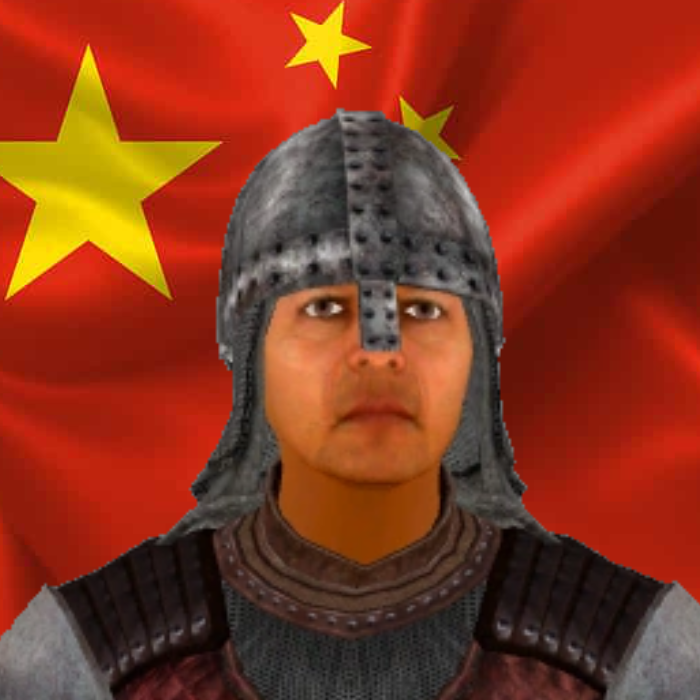
Lenin would not have been critical of the equivalent of that image in 1921 Russia, where the industry was heavily destroyed by the civil war and where there were no capabilities of planning the entire economy at once. The conditions in today’s China are very different, yet this “NEP” shows zero signs of being rolled back.
That’s part of the beautiful poetic irony of this image. Look at the mural behind the carboard cutout and flags. It’s celebrating the Chinese space program. That’s something that one could very easily interpet as celebrating the country’s advanced technology and industry.
deleted by creator
So they could upkeep their Westphalian system and keep profiteering?
A quid pro quo arrangement with other sections of international capital.
deleted by creator
deleted by creator
The USSR walked so that China could knife it from behind. Don’t cry because it’s over, cry because this fucking farce is supposed to be your USSR
IMO that’s a reductive view of the Sino-Soviet split.
This meme is quite reductive as well.
Critical support, but China ain’t gonna save us.
I agree 100%.
I hold that the conflict between China and the USSR was sad, unneeded, and bad.
I also hold that China is part of the hope for a restoration of socialist movement in the current era.
lol. China is such a sham
Liberals 🤝 half this site now
“China is fake communism”
Venezuela is about to be invaded by the US. Nobody gives a fuck anymore about hypothetical pushing of the big red button.
China has essentially no ability to project power in the Carribean AFAIK. The PLA naval forces are minimal compared to the US. China also has very vulnerable borders compared to the USSR, they’re encircled by American vassals and allies along a huge ocean border. Even if Venezuela requested it, I have a difficult time seeing what China could do that wouldn’t result in a massive escalation that fails to secure Venezuela in the end and leaves China hugely vulnerable. This isn’t the Cuban missile crisis.
The other side of this is I don’t think America has the ability to defeat the Bolivarian revolution like you’re implying. An invasion would be a huge mess for America, possibly worse than Vietnam. I’m not convinced missile strikes alone would achieve much.
The Soviet Union wouldn’t have intervened in Venezuela. And we know this because they withdrew nukes in Cuba against the wishes of Castro and Che.
deleted by creator
deleted by creator
I disagree that China “betrayed” the USSR. Even outside of the whole disagreement about Stalin and the USSR recalling industrial advisors from China, there is a lot of idealogical compromises and bad foreign policy the USSR did. In my opinion it was the other way around.
Soviet Revisionism (Ideological)
I think one would have to read the secret speech at the 20th CPSU congress to get any of the context. 人民日报 wrote a lot about why it’s a bad “self-criticism” in On the Historical Experience of the Dictatorship of the Proletariat.
For more than a month now, reactionaries throughout the world have been crowing happily over self-criticism by the Communist Party of the Soviet Union with regard to this cult of the individual. They say: Fine! The Communist Party of the Soviet Union, the first to establish a socialist order, made appalling mistakes, and, what is more, it was Stalin himself, that widely renowned and honoured leader, who made them! The reactionaries think they have got hold of something with which to discredit the Communist Parties of the Soviet Union and other countries. But they will get nothing for all their pains. Has any leading Marxist ever written that we could never commit mistakes or that it is absolutely impossible for a given Communist to commit mistakes? Isn’t it precisely because we Marxist-Leninists always deny the existence of a “demigod” who never makes big or small mistakes that we Communists use criticism and self-criticism in our inner-Party life? Moreover, how could it be conceivable that a socialist state which was the first in the world to put the dictatorship of the proletariat into practice, which did not have the benefit of any precedent, should make no mistakes of one kind or another?
I recommend one to read the whole of On the Question Of Stalin but some quotes:
In abusing Stalin, Khrushchov is in fact wildly denouncing the Soviet system and state. His language in this connection is by no means weaker but is actually stronger than that of such renegades as Kautsky, Trotsky, Tito and Djilas.
Comrade Khrushchov completely negated Stalin at the 20th Congress of the CPSU. He failed to consult the fraternal Parties in advance on this question of principle which involves the whole international communist movement, and afterwards tried to impose a fait accompli on them. Whoever makes an appraisal of Stalin different from that of the leadership of the CPSU is charged with “defence of the personality cult” as well as “interference” in the internal affairs of the CPSU. But no one can deny the international significance of the historical experience of the first state of the dictatorship of the proletariat, or the historical fact that Stalin was the leader of the international communist movement; consequently, no one can deny that the appraisal of Stalin is an important question of principle involving the whole international communist movement. On what ground, then, do the leaders of the CPSU forbid other fraternal Parties to make a realistic analysis and appraisal of Stalin?
The Communist Party of China has invariably insisted on an overall, objective and scientific analysis of Stalin’s merits and demerits by the method of historical materialism and the presentation of history as it actually occurred, and has opposed the subjective, crude and complete negation of Stalin by the method of historical idealism and the wilful distortion and alteration of history.
The Communist Party of China has consistently held that Stalin did commit errors, which had their ideological as well as social and historical roots. It is necessary to criticize the errors Stalin actually committed, not those groundlessly attributed to him, and to do so from a correct stand and with correct methods. But we have consistently opposed improper criticism of Stalin, made from a wrong stand and with wrong methods.
Khrushchov said, “Ah! If only Stalin had died ten years earlier!”[19] As everybody knows, Stalin died in 1953; ten years earlier would have been 1943, the very year when the Soviet Union began its counter-offensive in the Great Patriotic War. At that time, who wanted Stalin to die? Hitler!
It is not a new thing in the history of the international communist movement for the enemies of Marxism-Leninism to vilify the leaders of the proletariat and try to undermine the proletarian cause by using some such slogan as “combating the personality cult”. It is a dirty trick which people saw through long ago.
In the period of the First International the schemer Bakunin used similar language to rail at Marx. At first, to worm himself into Marx’s confidence, he wrote him, “I am your disciple and I am proud of it.”[20] Later, when he failed in his plot to usurp the leadership of the First International, he abused Marx and said, “As a German and a Jew, he is authoritarian from head to heels”[21] and a “dictator”.[22]
In the period of the Second International the renegade Kautsky used similar language to rail at Lenin. He slandered Lenin, likening him to “the God of monotheists”[23] who had reduced Marxism “to the status not only of a state religion but of a medieval or oriental faith”.[24]
In the period of the Third International the renegade Trotsky similarly used such language to rail at Stalin. He said that Stalin was a “tyrant”[25] and that “the Stalinist bureaucracy has created a vile leader-cult, attributing to leaders divine qualities”.[26]
The modern revisionist Tito clique also use similar words to rail at Stalin, saying that Stalin was the “dictator” “in a system of absolute personal power”.[27]
Thus it is clear that the issue of “combating the personality cult” raised by the leadership of the CPSU has come down through Bakunin, Kautsky, Trotsky and Tito, all of whom used it to attack the leaders of the proletariat and undermine the proletarian revolutionary movement.
[19.] N. S. Khrushchov, Speech at the Soviet-Hungarian Friendship Rally in Moscow, July 19, 1963.
[20.] M. A. Bakunin’s Letter to Karl Marx, December 22, 1868, Die Neue Zeit, No. 1, 1900.
[21.] Franz Mehring, Karl Marx, the Story of His Life, Eng. ed., Covici Friede Publishers, New York, 1935, p. 429.
[22.] Engels to A. Bebel, June 20, 1873, Selected Works of Karl Marx and Frederick Engels, Eng. ed., FLPH, Moscow, 1951, Vol. II, p. 432.
[23.] Karl Kautsky, Social Democracy Versus Communism, Eng. ed., Rand School Press, New York, 1946, p. 54.
[24.] Ibid., p. 29.
[25.] Leon Trotsky, Stalin, an Appraisal of the Man and His Influence, Eng. ed., Harper and Brothers, New York and London, 1941, p. 420.
[26.] Leon Trotsky, “The Stalinist Bureaucracy and the Assassination of Kirov”, On the Kirov Assassination, Eng. ed., Pioneer Publishers New York, 1956, p. 17.
[27.] Edvard Kardelj, “Five Years Later”, Borba, June 28, 1953.
hit character limit, will continue in reply.
The Soviets did have a lot of cause and fault in the origin of the split, but saying China didn’t do some dirty dealing later on is crazy.
They cut deals with the Americans to ally against the Soviets, gaining recognition for themselves, while burning the other socialist superpower. I don’t know how you can view positively stuff like China’s long term support of Pol Pot, their funding and arming of Afghan guerrilla groups, and invading Vietnam.
All of those actions were objectively horrid.
The Soviets did have a lot of cause and fault in the origin of the split, but saying China didn’t do some dirty dealing later on is crazy.
Yeah, The USSR can be revisionist, and China’s response to that (re: relations with Vietnam and Cambodia, siding with the US in Afghanistan etc.) Can also be stupid as shit
I can understand why someone would think Vietnam invading Cambodia was a good action. Although I strongly disagree that training counter-revolutionary Afghan guerillas was a strategic mistake by China. I think the context is important. Consider Vogel:
When Deng returned to work in 1977, the Soviet Union and Vietnam appeared increasingly menacing to him as they cooperated to extend their power in Southeast Asia. Vietnam had allowed the Soviet Union to use the ports that the United States had modernized and left behind at Danang and Cam Ranh Bay. This cooperation would give the Soviet Union the freedom to move its ships into the entire area, from the Indian Ocean to the Pacific. Missile bases in Vietnam were also constructed and held Soviet missiles aimed at China, with Soviet personnel and electronic equipment on the bases to provide technical assistance. And the Soviet Union kept massive numbers of troops along China’s northern border, a situation that seemed more threatening because, to the west, India was cooperating with the Soviet Union, and the Soviet Union was poised to invade Afghanistan. Meanwhile Vietnam had already taken over Laos and was preparing to invade China’s ally, Cambodia. […] To Deng, China was in danger of being encircled.
Sure, I would say that in hindsight the invasion of Vietnam and the support of Pol Pot didn’t help much since the USSR dissolved a decade later. Call it “objectively horrid” or “dirty dealing” as a moral argument, but I don’t consider the decisions illogical given the information available at the time. I think it’s unrealistic to say that China shouldn’t have done anything against the USSR as every single bordering country (except Nepal and Bhutan if I’m not forgetting any?), Mongolia, Korea, Laos, Vietnam, India, and Afghanistan, were friendly with the Soviets. I think most would say that China saw cooperating with the US as optimal since they were subjectively not as much as an immediate threat as the USSR, nothing more than that.
Deng then spelled out the experience of Chamberlain and Daladier trying to appease Hitler on the eve of World War II. The lesson: because Britain and France gave a weak response to Hitler’s initial forays, Hitler attacked to the West. To stop a threat, one needs to make a firm response, he advised, and the United States is now giving a weak response. The Soviet Union, he said, is now stronger than the United States and Western Europe combined. The Soviet Union has two weaknesses: it needs grain and technology, and the United States is helping with both, helping resolve its weaknesses and thus increasing the risk of a Soviet attack.
I think its important to emphasis that Deng said “The Soviet Union […] is now stronger than the United States and Western Europe combined”, as in China really saw the USSR as a greater threat than the US. Outside of moral arguments, I still believe the decisions taken given incomplete information were the logically correct actions in China’s interests.
I think its important to emphasis that Deng said “The Soviet Union […] is now stronger than the United States and Western Europe combined”, as in China really saw the USSR as a greater threat than the US. Outside of moral arguments, I still believe the decisions taken given incomplete information were the logically correct actions in China’s interests.
Bolded emphasis mine
Yeah, so that’s how the cookie crumbles, huh? Proletarian internationalism sacrificed on the altar of national “self-interest”. No wonder they continue to do business with the genocidal Zionist Entity today. It echoes this support of genociders in the past in service of “China’s interests”.
Stalin, despite at times having also done things that arguably made him one that was throwing stones in a glass house, really seems to have hit the nail on the head when in 1949 he said:
As far as I know in the CPC there is a thin layer of the proletariat and the nationalist sentiments are very strong and if you will not conduct genuinely Marxist-Leninist class policies and not conduct struggle against bourgeois nationalism, the nationalists will strangle you. Then not only will socialist construction be terminated, China may become a dangerous toy in the hands of American imperialists.
Source: https://revolutionarydemocracy.org/rdv16n1/china.htm
[…] allegations of the leadership of the CPC widely circulated after 1956 to the effect that the leadership of the CPSU and Stalin had an overbearing attitude to the Chinese communists […]
As far as I know China mainly cited Soviet hegemony after Stalin died. I would argue it would be more accurate to change “CPSU and Stalin” to just “CPSU”.
You speak of Sinified socialism. There is nothing of the sort in nature. There is no Russian, English, French, German, Italian socialism, as much as there is no Chinese socialism. There is only one Marxist-Leninist socialism. It is another thing, that in the building of socialism it is necessary to take into consideration the specific features of a particular country.
Take how Deng defined MZD thought in the Fallaci interview:
Deng: We also shouldn’t forget that it was Chairman Mao who combined the teachings of Marx and Lenin with the realities of Chinese history — that it was he who applied those principles, creatively, not only to politics but to philosophy, art, literature, and military strategy. Yes, before the 1960s — or, better, up until the late 1950s — some of Chairman Mao’s ideas were, for the most part, correct. Furthermore, many of his principles brought us victory and allowed us to gain power. Then, unfortunately, in the last few years of his life, he committed many grave errors — the Cultural Revolution, above all. And much disgrace was brought upon the party, the country, the people.
Fallaci: Would you permit me to tweak your answer a bit, Mr. Deng? When you say “Chairman Mao’s ideas,” are you referring to what is often defined as “Mao Zedong Thought”?
Deng: Yes. During the Revolutionary War, when the party was still in Yan’an, we gathered together all the ideas and principles advanced by Mao Zedong; we defined them as “Mao Zedong Thought”; and we decided that this thought would guide the party from that point forward. And that is precisely what happened. But, naturally, Mao Zedong Thought was not created only by Mao Zedong. What I mean is: even though most of the ideas are his, other old revolutionaries also contributed to the formation and the development of those concepts — Zhou Enlai, Liu Shaoqi, Zhu De, to name the most important among them.
If you’re to believe Deng’s definitions, I think it defines MZD thought to be completely compliant with with taking “consideration the specific features of a particular country”.
Stalin continues:
Socialism is a science, necessarily having, like all science, certain general laws, and one just needs to ignore them and the building of socialism is destined to failure.
What are these general laws of building of socialism.
-
Above all it is the dictatorship of the proletariat the workers’ and peasants’ State, a particular form of the union of these classes under the obligatory leadership of the most revolutionary class in history the class of workers. Only this class is capable of building socialism and suppressing the resistance of the exploiters and petty bourgeoisie.
-
Socialised property of the main instruments and means of production. Expropriation of all the large factories and their management by the state.
-
Nationalisation of all capitalist banks, the merging of all of them into a single state bank and strict regulation of its functioning by the state.
-
The scientific and planned conduct of the national economy from a single centre. Obligatory use of the following principle in the building of socialism: from each according to his capacity, to each according to his work, distribution of the material good depending upon the quality and quantity of the work of each person.
-
Obligatory domination of Marxist-Leninist ideology.
-
Creation of armed forces that would allow the defence of the accomplishments of the revolution and always remember that any revolution is worth anything only if it is capable of defending itself.
-
Ruthless armed suppression of counter revolutionaries and the foreign agents.
I can see arguments that China accomplished all 7 points. (Although 2 and 4 are arguably partially rolled back for reform and opening up)
Bourgeois nationalism
Haven’t read Lenin’s works on this yet so could be somewhat ignorant. “Bourgeois”, which I understand to mean that it’s used to promote national unity instead of class struggle. After 1981, sure one could say that class struggle was deprioritized and any nationalism used could be considered Bourgeois (although I personally see no evidence), but I believe at the time in 1979, just 3 years after the GPCR it would be hard to argue China didn’t focus on class struggle. If anything, I think most would believe the GPCR went too far with class struggle. I don’t think nationalism itself is bad if it’s used in the interests of communism. For example Lenin supported anti-colonial nationalism, and during the Great Patriotic War I’m sure that nationalist propaganda was used, and I assume the same was done in China as there few resources and literacy rates were low.
China may become a dangerous toy in the hands of American imperialists
I can understand one believing this up till ~2010 but China now seems to be the main opponent of America which I think refutes America ever having controlled China. The governments just happened to ally because of common interests.
Proletarian internationalism
China arguably proportional to it’s economy helped Vietnam during the war more than the Warsaw Pact did, ~$20 billion in aid. By 1979 many didn’t consider the USSR to be lead by a communist party at that point. Deng’s views in the Fallaci interview again:
Deng: You know, it’s a good thing that no Communist party feels itself to be patriarchally at the center of the movement - that there’s no center, no boss. At the outset, the Communist Party of the Soviet Union filled that role, but it is no longer the party led by Lenin. It is no accident that we regard the Soviet Union as an imperialist country and… yes, imperialist - socialist-imperialist. And since the country led by that party has become an imperialist country, it’s questionable if that party can still be considered a Communist party.
From their point of view, China was a communist country fighting against an imperialist country. I think it would be hard to argue from their perspective it’s harming proletarian internationalism even if many disagree. It was 600 million proletariat in China against ~350 million in the Warsaw pact? plus ~50 mil in Vietnam. If you count total number of proletariat (which yeah I think is pretty flawed) I could see an argument that it was the Warsaw Pact against internationalism by stationing ships and missiles in Vietnam targeting China, and Vietnam for allowing the Warsaw Pact to do so.
continue to do business with the genocidal Zionist Entity today
I get where you’re coming from, but in my opinion by showing that China is willing to trade with anyone, even if they commit genocide, it gives Russia and Iran confidence that they can have a reliable trading partner when NATO countries sanction them. I would argue that Russia and Iran’s economy would be much worse off if they didn’t think China was reliable. I disagree with China on complying with the UN sanctions on Korea because of this. I don’t know much about supply chains but imo sanctioning the Zionists probably wouldn’t have that big of a practical effect as seen that Russia is mostly doing fine despite being targeted by the NATO economies. Imo NATO countries would likely supply the Zionists anything they need, both civilian and military (and arguably already do). Imo the increased confidence of Iran having arguably the most reliable trading partner to back up their economy, and the confidence to give supplies to (nationalist?) liberation movements in like Ansar Allah, Hezbollah, and Iraq, is more important than “moral superiority” China would gain over sanctioning Israel. I’m sure the many appreciate Iranian ballistic missile production and the Hezbollah artillery duals. I could even see an argument that those actions hurt the Zionist economy more than Chinese sanctions would (although they aren’t necessarily mutually exclusive).
-
Foreign Policy
Czechslovakia 1968
Peking Review argues against this better than I can. From Chinese Government and People Strongly Condemn Soviet Revisionist Clique’s Armed Occupation of Czechoslovakia:
The Soviet revisionist leading clique has all along pursued the counter-revolutionary policy of U.S.-Soviet collaboration for world domination. Since the Glassboro talks, not to mention anything earlier, U.S. imperialism and Soviet revisionism have struck a series of dirty deals on such important questions as Vietnam, the Middle East and the prevention of nuclear proliferation. The present Czechoslovakia incident is no exception. It is the result of the sharpening contradictions in the scramble for and division of spheres of influence by U.S. imperialism and Soviet revisionism in Eastern Europe; it is, moreover, the result of the U.S.-Soviet collusion in a vain attempt to redivide the world. The aggression by Soviet revisionism was carried out with the tacit understanding of U.S. imperialism. Since U.S. imperialism has acquiesced in the invasion and occupation of Czechoslovakia by Soviet revisionism, how is it possible for Soviet revisionism to oppose the forcible occupation of south Vietnam by U.S. imperialism In fact, Soviet revisionism has long become the No. 1 accomplice of U.S. imperialism in its aggression against Vietnam and the rest of the world. That a big nation should have so willfully trampled a small nation underfoot serves as a most profound lesson for those harboring illusions about U.S. imperialism and Soviet revisionism.
Middle East
It is common knowledge that Soviet revisionism sends Jews to Israel every year. Some 100,000 Soviet Jews have streamed into Israel in the four years since 1970. Public opinion in the Arab countries scathingly denounced this despicable act detrimental to the Arab people’s struggle. The Egyptian paper Al-Ahrum pointed out: “The Soviet Union’s decision could be interpreted as meaning permission for Soviet Jews to fight the Arabs.” The Kuwaiti paper Ar Rai al-Amm said: “It is a conspiracy jointly perpetrated by U.S. imperialism and Russia against the Arab people.” As to Soviet revisionism’s other ugly performances in the Middle East, they became quite notorious much earlier. It amassed ill-gotten wealth by selling arms in the Middle East and pressing buyers for repayment of debts on earlier purchases, which greatly angered the Arabs. In speeches made during the year, Egyptian President Anwar Sadat time and again accused the Soviet Union of making difficulties on the question of arms supplies and dunning Egypt with demands for repayment of debts in an effort to control Egypt through “aid.” The Egyptian President, however, made it clear that “we are not prepared to cede any part of our national will!”
From Ugly Features of Soviet Social-Imperialism:
For years the Egyptian people have waged an arduous struggle against Israeli aggression, a struggle which took the lives of many of their fine sons and daughters. In no circumstances should the fighting Egyptian people be pressed for repayment of debts. It stands to reason that all the debts to Soviet revisionism incurred for defence purposes should be written off.
One of the Soviet revisionists’ sharp practices is to ban arms supplies in times of need. On the eve of the 1973 October War when the Egyptian people were making preparations against aggression, the Soviet revisionists time and again held up delivery of the arms promised. Towards the end of the war when Israel, equipped with numerous U.S. planes and tanks of the latest design, penetrated into the west bank of the Suez Canal, the Soviet revisionists did not hesitate to turn down Egypt’s repeated requests for recoupment at the critical moment of its struggle, compelling Egypt to accept a ceasefire. Throughout the 14 months following the October War, Egypt got no arms replenishment worth mentioning from the Soviet Union. Such is the truth about the much vaunted “powerful” Soviet support for Egypt during its most difficult days.
Vietnam 1979
In defense of the 1979 war look at Peking Review again:
The Chinese frontier forces counterattacked when the situation became intolerable and there was no alternative. To make China a prosperous and strong socialist state and attain the magnificent target of four modernization’s by the end of this century, the Chinese people urgently need an international situation of peace and stability. However, the trees may prefer calm but the wind will not subside. Instigated by Soviet social-imperialism and with its support, the Vietnamese authorities escalated their armed encroachments upon China to intolerable dimensions, compelling us to take action much against our will.
The Vietnamese authorities are nationalist expansionists. To achieve their ambition for setting up an “Indochina federation” and dominate Southeast Asia, they have acted perfidiously and have unscrupulously committed aggression and expansion. While accepting massive aid from the Chinese people who were able to provide it only by dint of practicing strict economy and at the cost of sweat and blood, the Vietnamese authorities slandered socialist New China which consistently upholds proletarian internationalism, and fanned up national hatred by making distorted interpretations of historical events and even seized Chinese territory by force of arms. Their expansionist ambition has inflated in the past two years. They openly trampled underfoot all norms of international relations, flagrantly invaded Kampuchea and frantically intensified their anti-China campaign
Instead of striving for economic restoration and improving the living conditions of the Vietnamese people after the war of resistance against the United States, the Vietnamese authorities have made use of the political capital and military equipment gained from the war and depended on Moscow’s backing to hastily push ahead their plan for establishing an “Indochinese federation” in an attempt to dominate Southeast Asia. They have dispatched 50,000 troops to Laos to control the country. They have used 150,000 troops to launch a large-scale war of aggression against Kampuchea. At the same time, they have dispatched armed personnel to repeatedly intrude into Chinese border areas and provoke incidents of bloodshed, and made frequent war cries against China, making China the “main enemy.”
[Vietnam] openly trampled underfoot all norms of international relations, flagrantly invaded Kampuchea and frantically intensified their anti-China campaign

Holy shit. Yeah that state in the middle of a genocide backed by China and the US really needed to be protected from Vietnam /sarcasm
Imagine trying to justify one of China’s biggest international L’s like that. I’ve seen a lot of stuff on this site but never someone defending Chinese support of Pol fucking Pot and arguing against Vietnam’s intervention. I had already logged off but when I saw this I did a double-take.

Removed by mod
As someone who’s visited Tuol Sleng and Choeung Ek, and met survivors of the Cambodian genocide, Vietnam invading Cambodia was good, actually, and China was appallingly in the wrong to oppose Vietnam’s actions there.
TIL Gorbachev is secret seeseepee spy.
I wish China is the continuation of the USSR, but it isn’t.
The USSR was as close to a worker’s state as we have ever gotten, despite all its flaws. The elimination of class divide took precedence, and the advanced industrialization and technology came as a result of this new kind of society.
China’s post-reform era is, as Deng Xiaoping put it, “let a small bunch of people to get rich first” and “black cat white cat, it doesn’t matter”. China’s reform era follows much closer to the Japan and Singapore models than the USSR. While the first few decades of such NEP had been great, it also exacerbated class divide and wealth inequality, and China finds itself difficult to decouple from the neoliberalized free trade system as we’re now seeing. There is next to no welfare for your average working class people. So, not at all comparable to the USSR. But if you’re top 10%, it’s great living in China though.
Reposting what I wrote a while ago:
The significance is even greater than many leftists who live in the 21st century realize:
The Soviet Union was the ONLY adversary that the United States has ever been afraid of.
Yes, you heard it right. Not even the threat of China today reaches anywhere near the fear that the US had against the Soviet system. I’ll get into that in a moment.
It would be a grave mistake to see the 70-year long epic struggle between the US and the Soviet Union as nothing more than two superpowers vying for global domination. Such thought would be a great disservice to the significance of the 20th century Cold War: an ideological battle for the future of humanity.
Many people go crazy about China’s amazing economic transformation, but understand that what China has managed to overtake the US, whether it is infrastructure, shipbuilding, automation and robotics, cars, advanced electronics etc. all of that had already happened before with Japan more than 40 years ago.
And the rise of China since the reform and opening up through its integration into the global free trade market by producing cheap exports through suppression of domestic wages and demand makes perfect sense for countries/economies that were able to take advantage of industrial policies and the geopolitical circumstances of the time in the decades even before China (e.g. Japan, Germany, Taiwan, South Korea etc.)
What made the Soviet Union truly unique and a fearsome adversary to global capitalism was not its technological advances, rapid industrialization, or winning the space race, BUT that it managed to achieve all that in defiance of the Western economic theory!
A true socialist state where workers were treated with dignity and respect.
A country that is not drawn on nationalist lines but on a supranational identity committing to an ideology that brings together people from all over the world, regardless of nationality, ethnicity and culture.
A society without the oppression of an exploitative and parasitic capitalist class.
A system once thought impossible to achieve progress by capitalist propaganda. No, you see, capitalism is the fastest way to build a nation, while socialism only ends up bringing poverty to all!
The Soviet Union smashed all the capitalist propaganda into pieces.
It is unfortunate but I have to say this: unlike China today, the Soviet workers enjoyed the full welfare and protection of their rights as workers, did not have to worry about being unemployed, did not have to live paycheck to paycheck, did not have to pay mortgage, received free education and healthcare of the highest quality, enjoyed labor rights including working hours comparable to those of the “wealthier” social democratic Western European working class, and most impressive of all, the Soviet government continued to pay out full pension and free healthcare throughout the entire Great Patriotic War (WWII) even when unthinkable deaths and destructions were happening all around the country and the world.
I know it is hard for people who live in the 21st century to understand, but know that there was a time when workers committed their energy and time not to work to survive, but to build a new society that would benefit all of humanity.
I strongly recommend reading Ostrovsky’s semi-autobiographical novel How the Steel Was Tempered (1930s) to get a glimpse of what I wrote above meant:
Man’s dearest possession is life.
It is given to him but once, and he must live it so as to feel no torturing regrets for wasted years, never know the burning shame of a mean and petty past;
so live that, dying, he might say: all my life, all my strength were given to the finest cause in all the world──the fight for the Liberation of MankindSeriously, read the novel which was based on the author’s own lived experience. It is impossible to grasp what happened in the minds of the Soviet people with a perspective of the 21st century world.
This is not the say that the Soviet Union did not have its flaws, but that its existence served as a beacon for a different kind of future for many people living in the post-war reconstruction era. That brief period of hopefulness has never been replicated, nor has its conditions emerged again (so far), since the fall of the Soviet Union. It is an entirely different kind of future that we had lost.
deleted by creator
While I think all of the criticisms of China that everyone has commented are absolutely valid, I also think that China is not in a position to transition to a communist mode of production. One part is lack of political will for it, and that will require the people of china to clamor for it, but the other part is that China is still very dependent on commodity production for the western states. I think they are making the right moves by building up economies of 3rd world countries, as that will ease the necessity of the west, but as long as they are a strongly export based economy, they are stuck. Moreover, as the country moves towards automation and exporting that automation, they are coming up to an unexplored precipice. And while we, from the outside, can just say ‘communism can handle it’, From the position of the government it’s probably a very concerning moment where the wrong move opens you up to being cannibalized by the capitalists or a color revolution. China is in a precarious position, and they are chipping away at the problems slowly. I hope that they are making the right choices given the information they have.
One part is lack of political will for it, and that will require the people of china to clamor for it
it sounds like there might be way more interest in that now than there has been in many years
Fully agree, especially with Americans going on rednote and actually talking about their experiences lol. I’m not so versed on Chinese sentiment but I think that interest is largely with the younger generation, and won’t be heard as much by the older political class (another issue standing in the way).
I hope that they are making the right choices given the information they have.
If posts from people here are any indication, and the historical trends of every socialist movement ever, it’s so hard to believe that this will happen. I want it to, desperately, but it sounds like the entire PRC has captialulated to the bourgeiosie and Western pressure.
I don’t think they have completely capitulated yet, largely because China remains in one piece, but we’ll see.
deleted by creator
For all the valid critisms one could levy against Socialism with Chinese Characteristics, it’s without a doubt the largest force developing socialism in the modern world. Mourning for what we’ve lost is fine, but I believe at a certain point one has to look to the future, and with optimism, hopefully.
Most of this thread was casting doubt on China “developing socialism” so I don’t think coming in here saying it was “without a doubt” doing that makes sense.
The best to come neither the true resurrection of nature nor even a socialist world republic. Sad!